

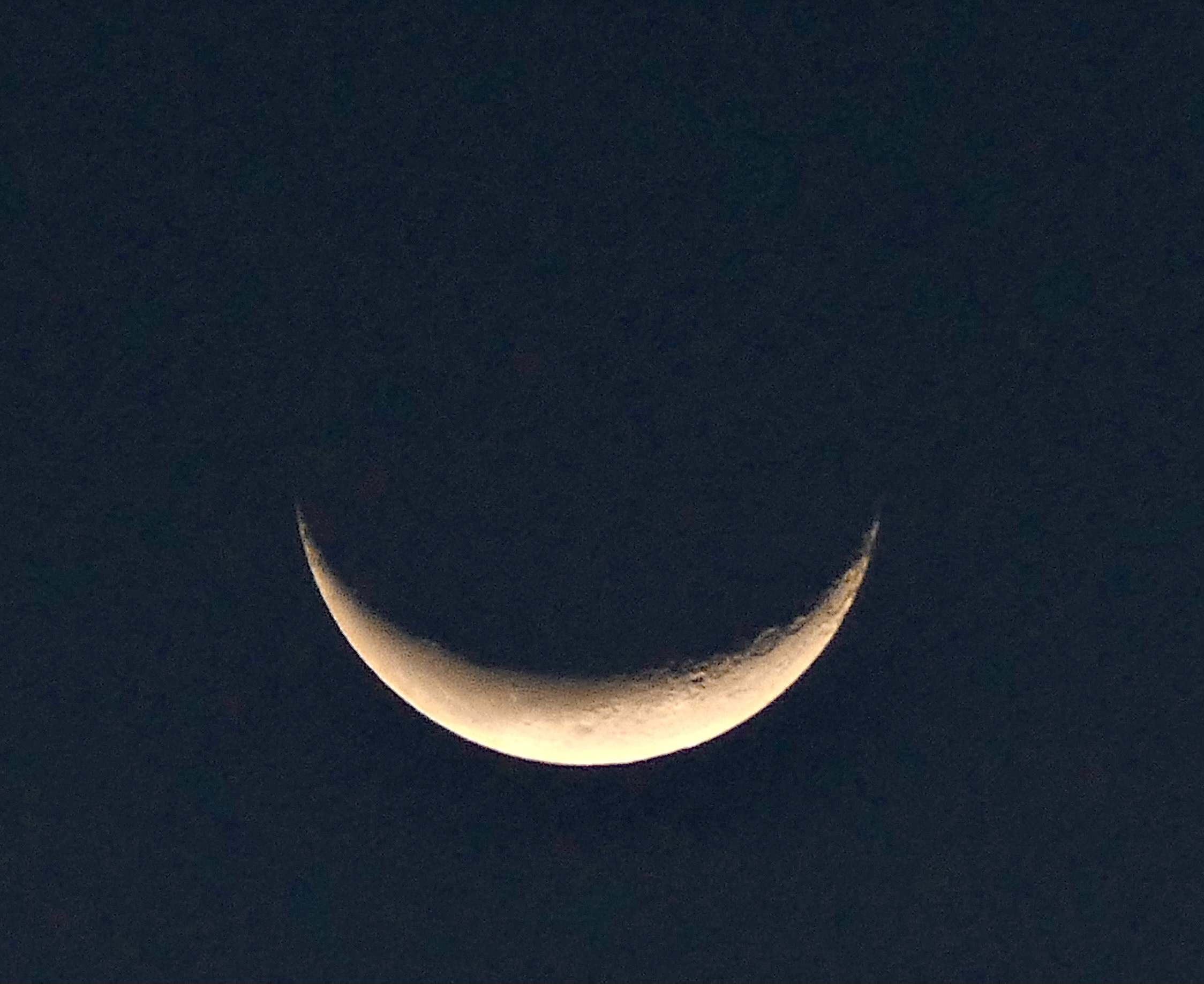
September always brings big moons. The best this year was the one I saw on the Friday before the autumnal equinox: a waning crescent low in the eastern sky an hour before sunup, rising u-shaped over the roofline of the beat-up old door factory next door and the tollway beyond. Venus was next to it, and both were exceptionally bright. Not bright enough to outshine the unshielded floodlights that illuminate the loading dock there at the edge of the urban woods, or all the other ambient lumens of the solipsistic city. But wondrous enough, in that ephemeral moment, to let a glimpse of celestial transcendence pierce our semiotic prison.
At night since Labor Day we’ve heard the piledrivers pounding away between the onramps, building out the pump station to channel the water from the expanded interstate into the river. I wonder if the birds headed south notice the change in the landscape below, the freshly excavated hole where a month ago was a tall green hill.
The morning sun brings the reveal of whatever weird shit went on in the night, stories told by things. A car left behind, a pink plastic margarita cup in the bush, two spent whippit canisters by the curb. Friday morning we found a dead mama opossum in the middle of the lane, American marsupial with her four little joeys scattered from her pouch across the warming blacktop. Early enough that the vultures had not yet found them.
According to the 1933 OED on our library shelf, Captain Smith reported back from Virginia in 1612 that the opossum has “a head like a Swine, a tail like a Rat, and the bigness of a Cat,” which is a good description of the adults, but the infants look more like little puppies.
The coral vine has been in bloom all over town throughout the month, long strands of hot pink petals crawling up fences, power lines and the occasional building. This is the plant’s usual season to flower, from the end of summer to the first real cool of fall. The plant is designated as an invasive, being a native of Mexico, but it seems to fit in here well, like a lot of species that have moved up here as temperatures have gotten hotter. It coexists and intertwines with the cross vines and their hummingbird-friendly trumpet blossoms, and when you get up close you can see how busily the bees work them, in this season when so few of the native plants are in bloom or even alive.
I saw a beehive on TV right around the same time as I started noticing all the bees around our yard. It was there in the background during one of those press conferences about the assassination of the traveling campus evangelist outside Provo. A beehive is the symbol at the heart of the Utah state flag, a symbol that relates back to the days of Deseret. The beehive also was the central feature of my high school’s official seal, up there on the podium to be deciphered every day during morning assembly. I guess they got the idea from the Freemasons, which the founders of both places must have been. A symbol of industriousness, of individuals always busy working for the community, but a weirdly inapt one for such intensely patriarchal communities. Maybe it expresses a subconscious yearning for a better mode of organization than mass supplication to the dark energy of the angry father.
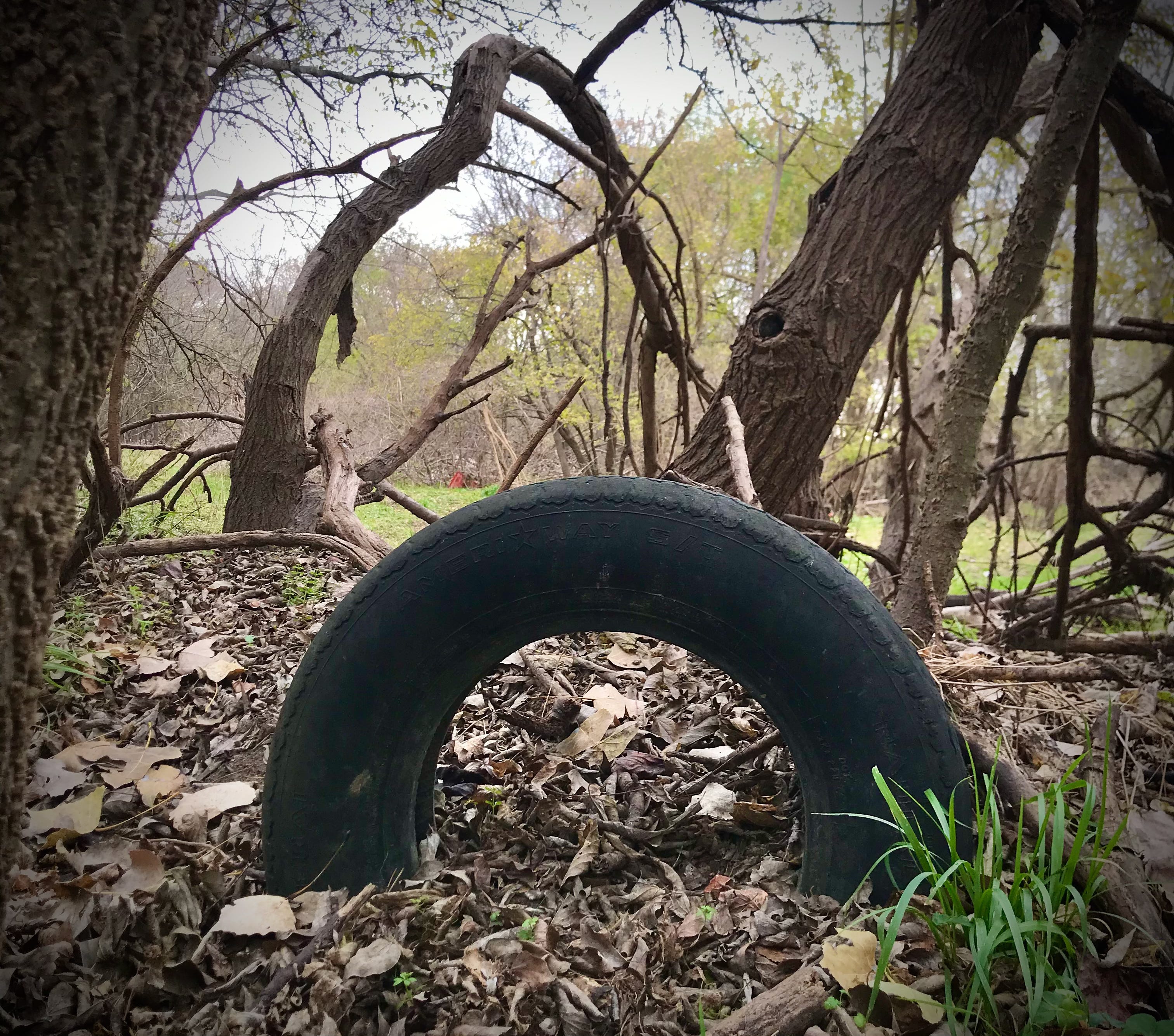
The bees may be as invasive as the coral vine, but I’m always reflexively reassured by any prodigious signs of biodiverse life around me here in the city, as our rainy summer devolves into a long autumnal drought, and even the mature trees seem ecologically exhausted. In our early years here on this lot, we had a colony of what they used to call “killer bees” in the zone of illegally dumped debris at the back of our yard. They had made their home in a tire half-buried in the ground, surrounded by concrete rubble. A big truck tire, filled with honeycomb instead of air. The bees were chill, unless you tried to mess with their nest, in which case they would swarm and chase you out the front gate and down the block (I never tried, but some others did). Maybe we should make our own camp flag out of that memory.
The Tuesday after the equinox my Instagram feed served me another creepy post from the current management of the Department of Homeland Security. This one featured a flyover video, coming up over a mountain meadow to see the majestic snowy peaks as the text rises from the valley in all caps, “AMERICA: REMEMBER WHAT WE’RE FIGHTING FOR.” I thought about where I’ve seen that cinematic maneuver before—in both The Sound of Music and Triumph of the Will. Which of those they were going for was made even clearer by the caption below the image:
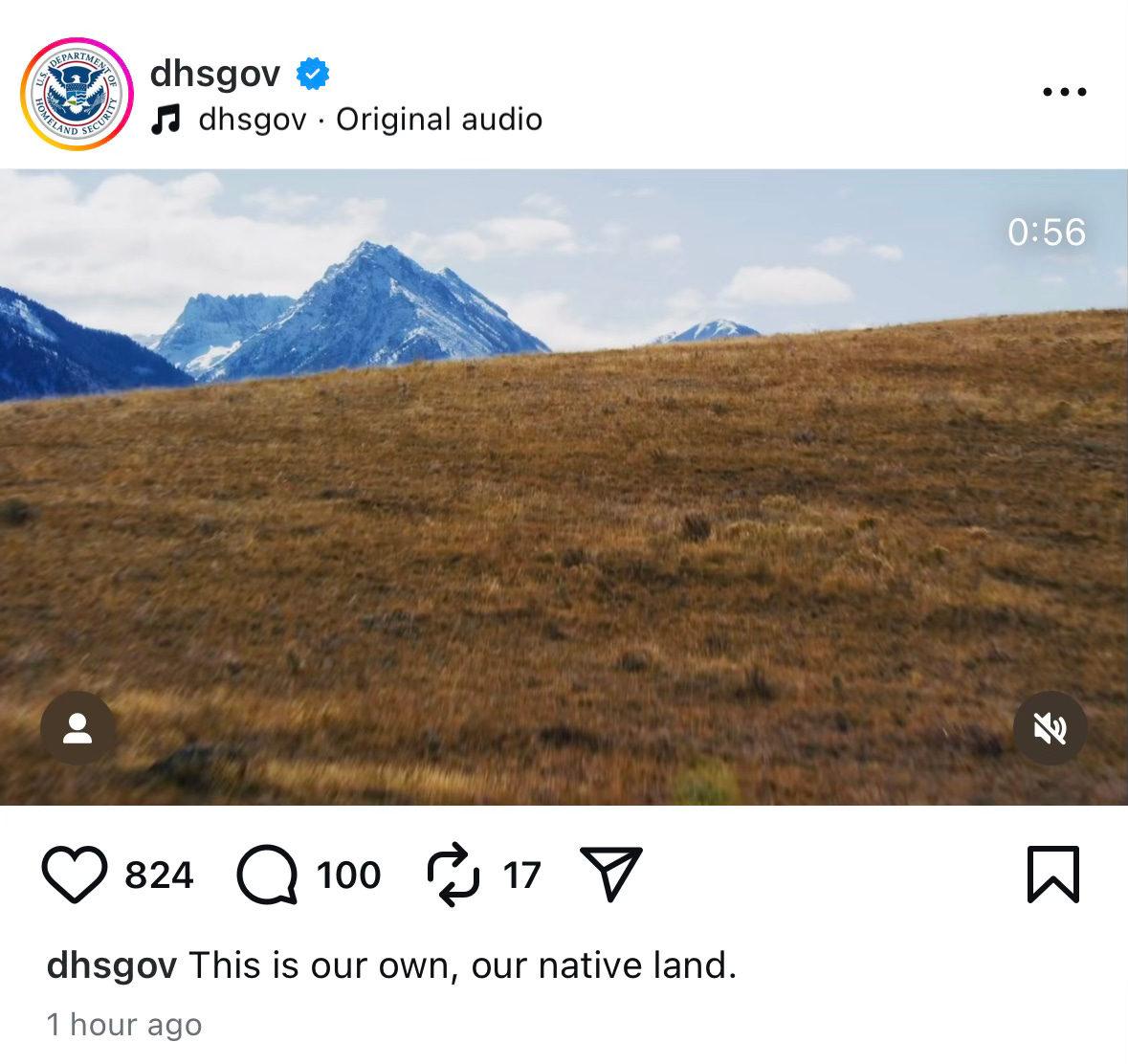
It’s been weird this year, the feeling that every time I open my phone I’m being trolled by my own government. In this case, with a manufactured and self-evidently false nativism used by the agency to justify its eviction of people who in many cases are the descendants of actual Natives of this hemisphere. They as well as you surely appreciate what classic Orwellian doublespeak it is, to make performative declarations of nativity about a colonial settler nation built through genocidal depopulation and the ravaging of a “wilderness” through the exploitation of enslaved and indentured labor. What makes it so uniquely American is how you can tell they are laughing when they do it, with the sinister privilege of the popular kids in some campus comedy.
I remember thinking how creepy it was, 24 years ago, when they reorganized the government after 9/11 to put various agencies that had slowly evolved across disparate federal departments under a new cabinet secretary devoted to protecting the “Homeland,” an un-American euphemism that encodes, in almost all of its modern uses, an idea of return of what are really settlers coming from someplace else. And when the people invested in those myths push them this strongly, in a way so obviously at odds with observable reality, you know they must be worried that the fiction on which the legitimacy of national borders depends is becoming more apparent.
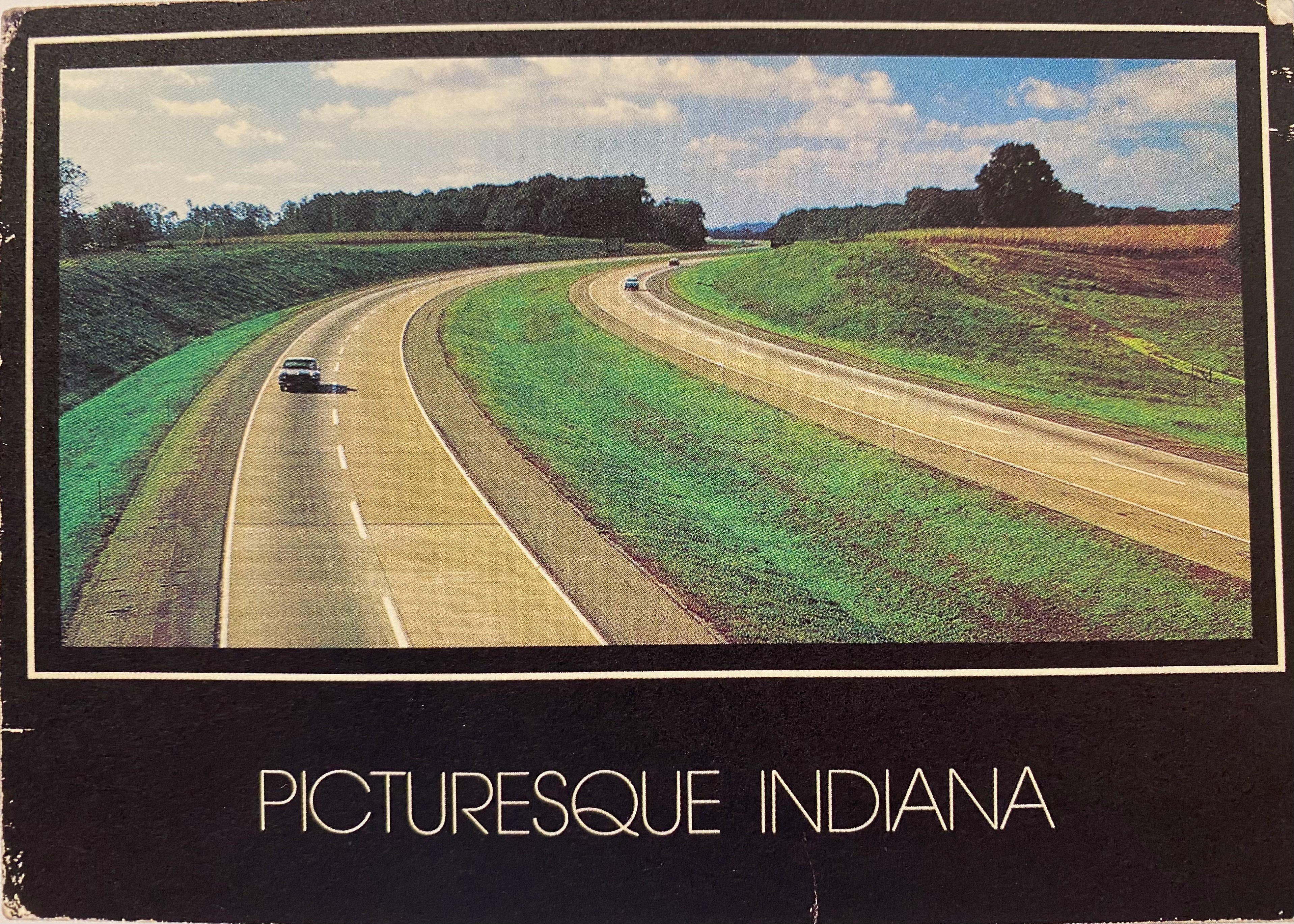
If it were really our home, surely we would have treated it better. Ask the opossum who is the native, and who the conqueror.
Nature has a way of complicating our conceptions of nativity, and it’s starting to do so at an accelerating pace. Last week researchers at UT-Austin announced the discovery of a new bird—a hybrid of two species of jay from different genuses, whose most recent common ancestor was 7 million years ago and historically had no overlapping range. Global heating has changed that, and now the green jay of Mexico and Central America and the blue jay of North American backyards have found each other, as the former birds’s range has reached further north into Texas as average temperatures rise and ecologies change with them. The resulting bird, offspring of a female green jay and a male blue jay, is pictured in the center panel below:
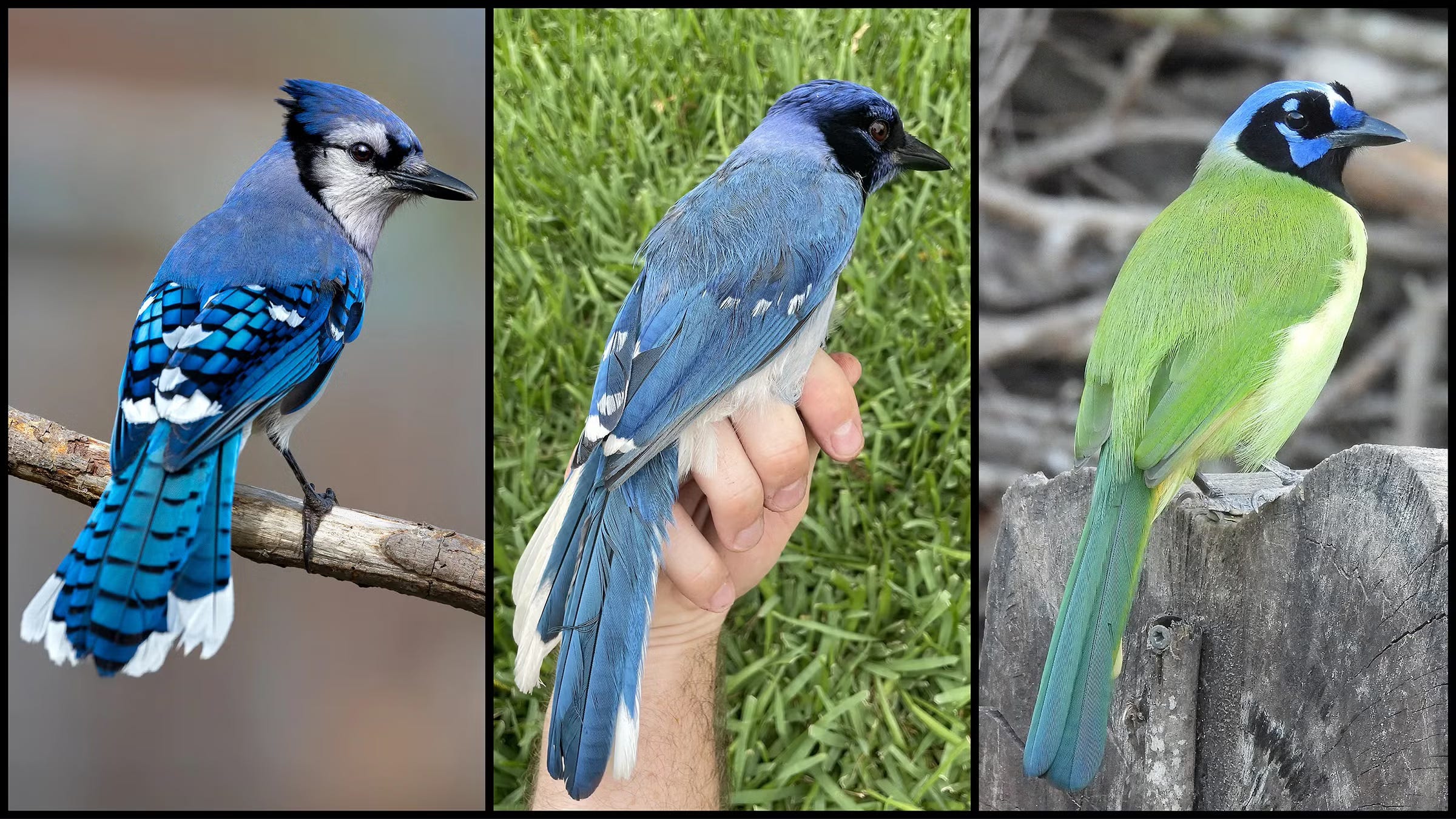
Discoveries like these are a powerful reminder, in the back pages of the feed, that diversity is the key to success, and the path of successful adaptation to a dynamic and destabilized future. One wonders how many other new hybrids and other fresh evolutionary wonders are out there that have not yet been observed. And how our own species will adapt to the challenges we’ve created for all the life on Earth.
We may never acquire the gift evidenced by this anole I saw on our retaining wall last weekend: the ability to regenerate large portions of one’s own body after an accident or an encounter with a predator.
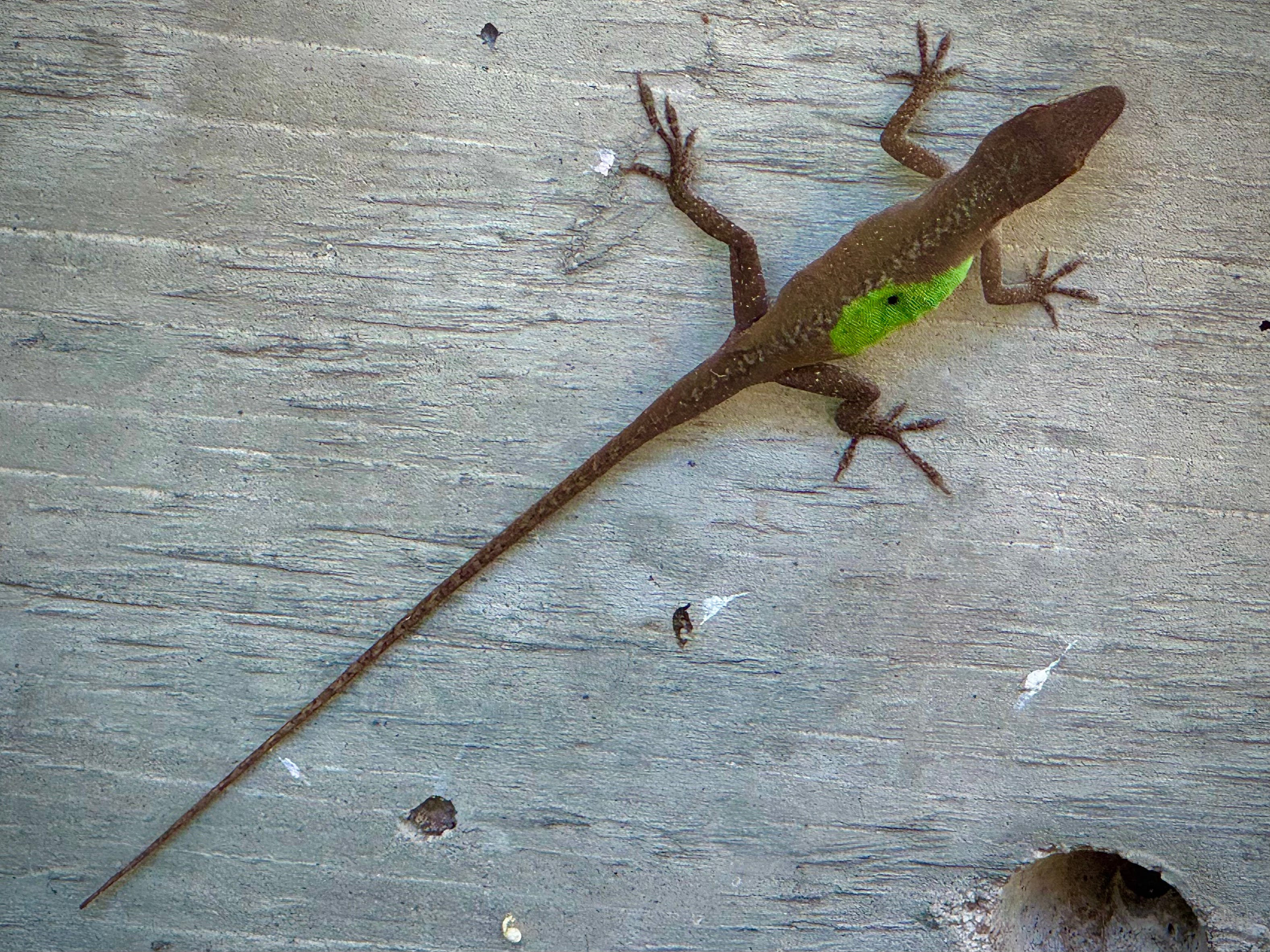
I was grilling dinner when I saw it, and had to raise my glass in admiration. Long live the new flesh. May your descendants grow large, and lord over the rewilded ruins we leave behind.
Upcoming Events
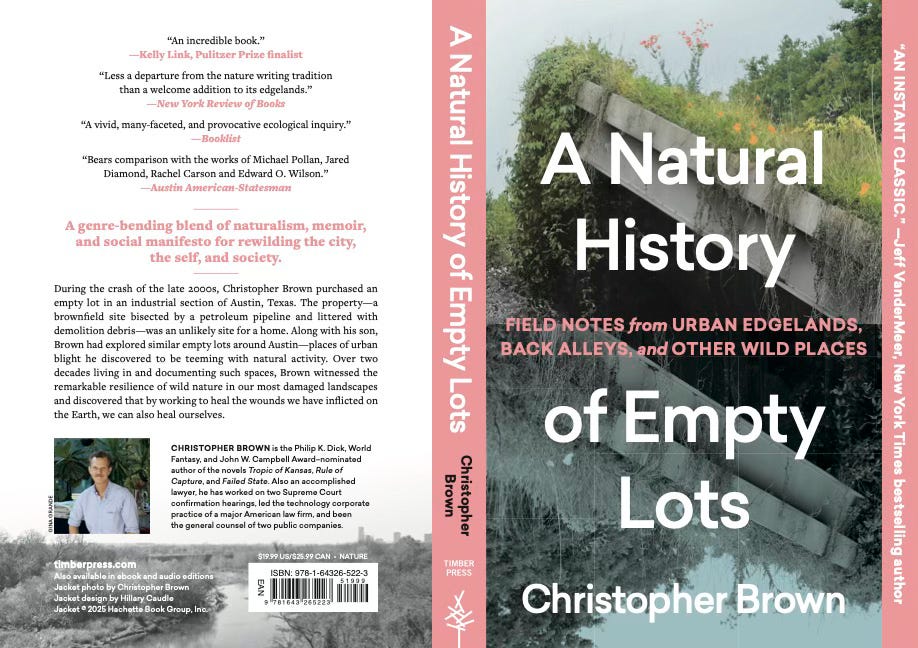
It’s been a year this month since the release of A Natural History of Empty Lots. Thanks to all the readers, booksellers, librarians and reviewers who have given the book such a warm welcome, and to the longtime readers of this newsletter who helped me see and develop the promise of this material.
The book has done well enough to warrant publication of a paperback edition, the launch of which we’ll be celebrating the evening of Tuesday, October 7 at Alienated Majesty Books in Austin. We’ll be screening Brett Gaylor’s short film Field Notes from an Apocalypse, which documents some walks in urban woods and a paddle to the Tesla Giga Texas factory, and then climate activist Alexia LeClercq of Start:Empowerment + PODER, anthropologist Craig Campbell of UT-Austin + the Bureau for Experimental Ethnography and I will be in conversation about how to find (or fight) our way to a better future from here. RSVP and details here. And if you haven’t checked out the book but are interested, you can preorder the paperback (or order the already-available hardcover, e-book or audiobook edition) here.
On November 5, I’ll be teaching a single-session class “Writing the Natural World: A 21st Century Reboot” for the Writer’s League of Texas, online from 6:30-9:30 pm CST. Details and registration here.
I have a piece in the October issue of Texas Highways that hit the stands this week, telling the story about the time I saw a strange, Chupacabra-like creature while driving to see the Marfa Lights. The accompanying photos by Eli Hartman are amazing. I’ll share a link here when the piece is available online.
The Roundup
“An Intergeneric Hybrid Between Historically Isolated Temperate and Tropical Jays Following Recent Range Expansion” — full story about the green jay hybrid here and full research paper here (no paywall).
For more on tissue regeneration in anoles, visit ASU’s Kusumi Lab.
On the subject of resilience in the face of what’s coming, Alex Steffen over at The Snap Forward has a new 30-day Personal Climate Startegy workshop starting next week.
Via “human web crawler” Bruce Sterling, recent research on the marine life that makes its home in and around abandoned WW2 munitions.
RIP Mark Norell, the paleontologist whose adventures in the Gobi Desert finding feathered dinosaurs provided rich learning and entertainment for my son and I when he was a dino-crazy kid.
The Wall Street Journal visited William T. Vollman in his writing studio, a former Mexican restaurant in Sacramento.
The etymology of the American idea of the “Homeland.”
Currently reading: An Inventory of Losses by Judith Schalansky, translated by Jackie Smith.
At the LRB, Brett Christophers on Andreas Malm and giving up the fight to prevent climate breakdown, and Ian Penman on Brian Eno.
If you’re in the Boston area, my son Hugo Nakashima-Brown, a woodworker and furniture maker, has an exceptional show up at the Crossings Gallery at Harvard’s Ed Portal in Allston, with some of his latest marquetry pieces among other work in display.
Have a great week.
An especially excellent post this issue. And congrats on the paperback!
Nice piece. Your writing continues to change how I experience my own observable reality.