

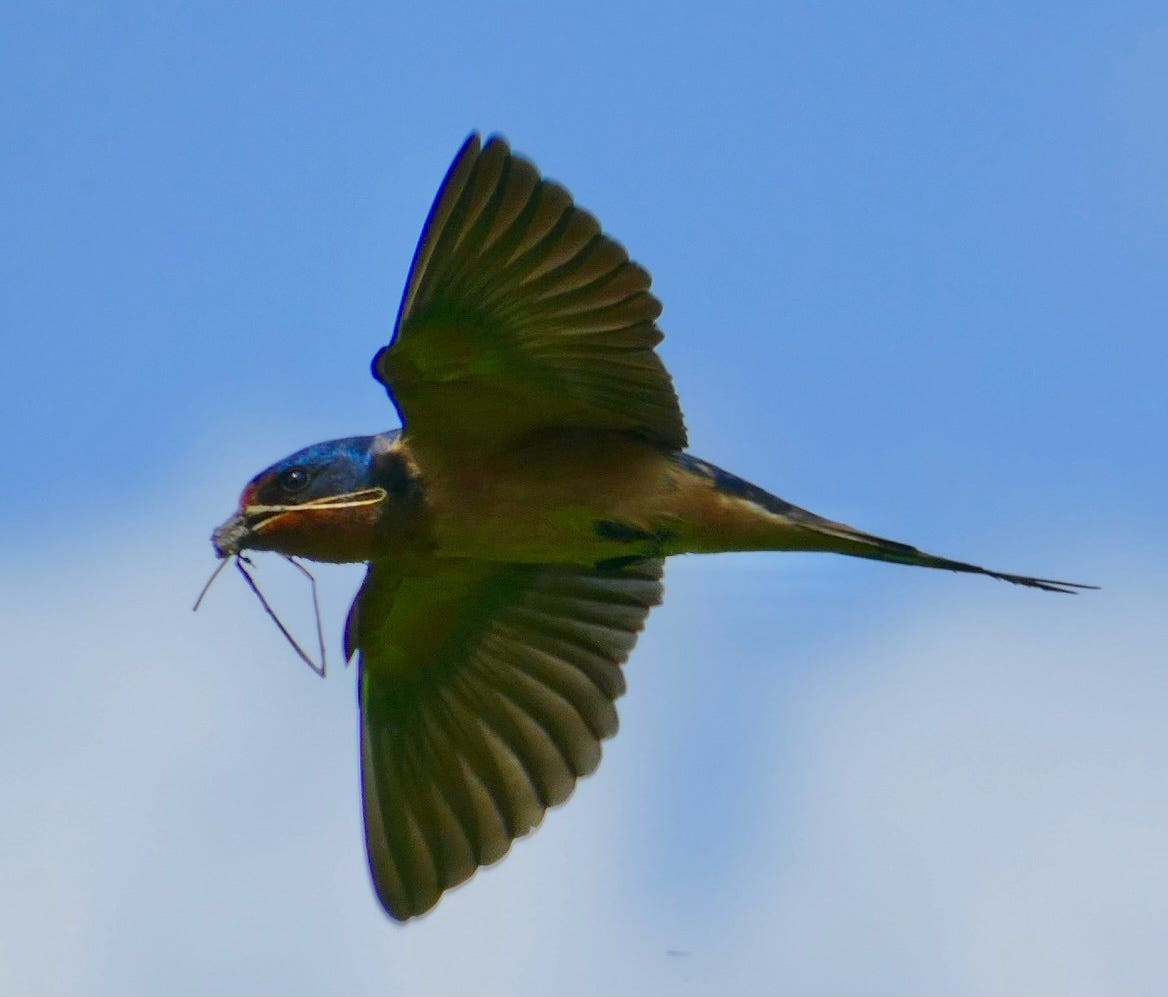
The first time I ever paid much attention to cliff swallows was on a spring day not long after 9/11, as I unloaded my canoe from the car. It was a Saturday morning, and my then second-grader son and I were planning to explore the stretch of urban river I had seen from the bridge on the eastern edge of town, where the old highway to Bastrop and Houston crossed over the Colorado in a neighborhood of industrial land uses. The bridge was old, a 1930s truss, and it still carried the southbound traffic in two narrow lanes, but over the years a more modern and brutal concrete cloverleaf had grown around it, at the point on the north side where multiple roadways converged near what once had been the low-water crossing of ancient trails. Perfect habitat for the aerial ballet of Anthropocene swallows.
They were zipping all around us, banking and diving, cutting through the muggy air and giving the brutal infrastructure a sense of life. I recognized the birds, or at least their general type. We’d had them in Des Moines when I was a kid—I remembered being buzzed by swallows when my buddies Ben and Phil and I figured out how to climb up on top of our middle school on summer evenings, before we advanced to churches. But I’d never noticed their nests. Maybe because that was before the 1980s, when cliff swallows were first observed to have started using the concrete nooks under our elevated roadways as one of their preferred sites to make their little pustules of dappled mud, giving our most brutal and ubiquitous alterations of the fossil fuel-era landscape an organic wonder they did not earn.
Here’s a video vignette from 2017, taken a quarter-mile north of the site of that first sighting, on a bridge that was soon demolished after crews had power-washed the nests off.
The cliff swallows that spend half their year in Austin are remarkably similar to the bats that famously breed under our downtown bridges, and if you spend enough time along the urban Colorado you may start to notice how they show up around the same time of day and evening, and move through the air on short wings and forked tails well-adapted to intercepting the same little insects that get the fish to jump from the water. But the swallows have a much wider range into the north, and their recent adaptation to our urbanization of the continent has evidently facilitated significant growth in their population.
In a 30-year study of cliff swallows in southwestern Nebraska, Charles and Mary Bomberger Brown found that the birds were evolving so rapidly in response to their colonization of our high-speed transportation arteries that their average wing lengths were shortening—the better to get immediate vertical lift to evade the cars and trucks, and achieve a measurable decrease in vehicular deaths. By the end of the three decades of field observations, most of the road-killed birds the researchers found were the longer-winged variants.
That’s probably why I was so pleased when, leading a group of folks on a guided walk last weekend, I noticed another colony of swallows and was able to share the wonder with a group of others IRL:
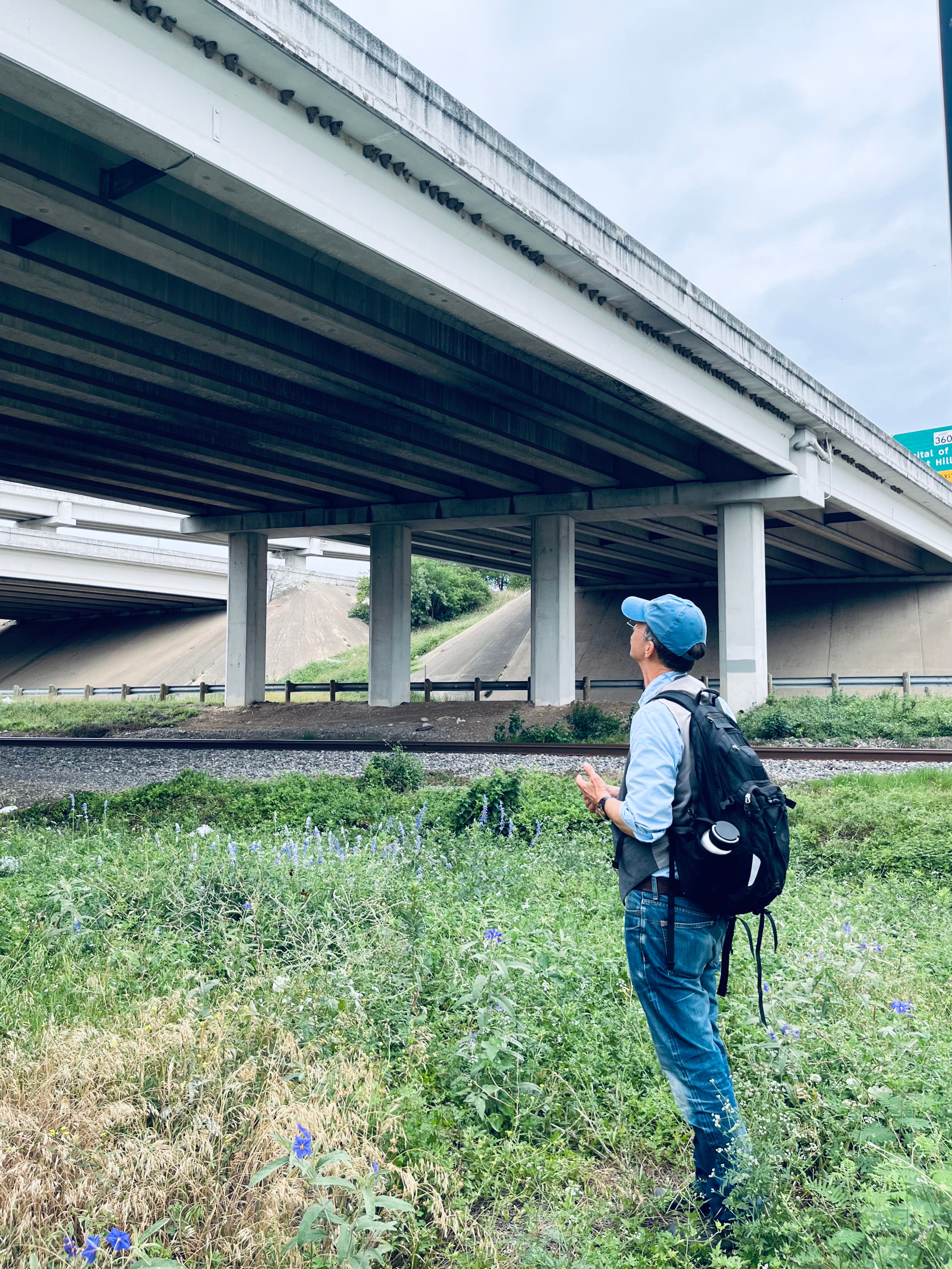
The wonder was partly charged by how unlikely a spot it was to see any signs of wild life: the intersection of two major local freeways, Highway 183 and the Mopac Expressway. I had the good fortune to be invited by the Texas Book Festival and Fusebox, Austin’s biennial performing arts festival, to be the “performer” for their first-ever collaboration. When the discussions first started getting going about how we might do something with my Empty Lots book in an actual empty lot, there was talk of live readings and maybe some adventurous and un-amplified music, but thankfully we got around to a better idea when Fusebox impresario Ron Berry suggested maybe just taking people on some walks like the ones I took him on to scout possible sites. That’s how I ended up having a group of folks meet me for a “nature walk” in the parking lot of a frontage road strip mall, between the Firestone and the Casa do Brasil, at 8 a.m. on a Saturday.
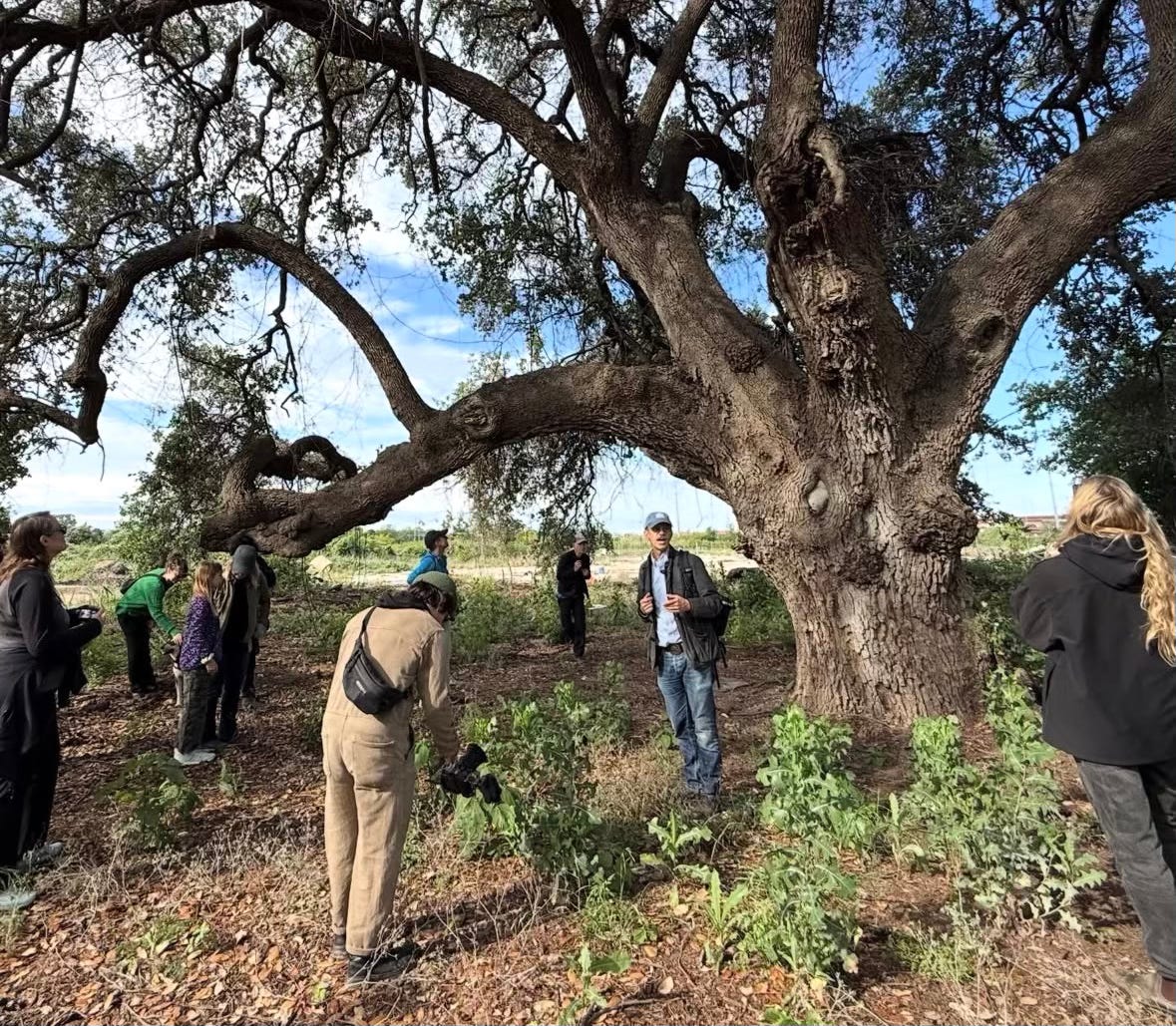
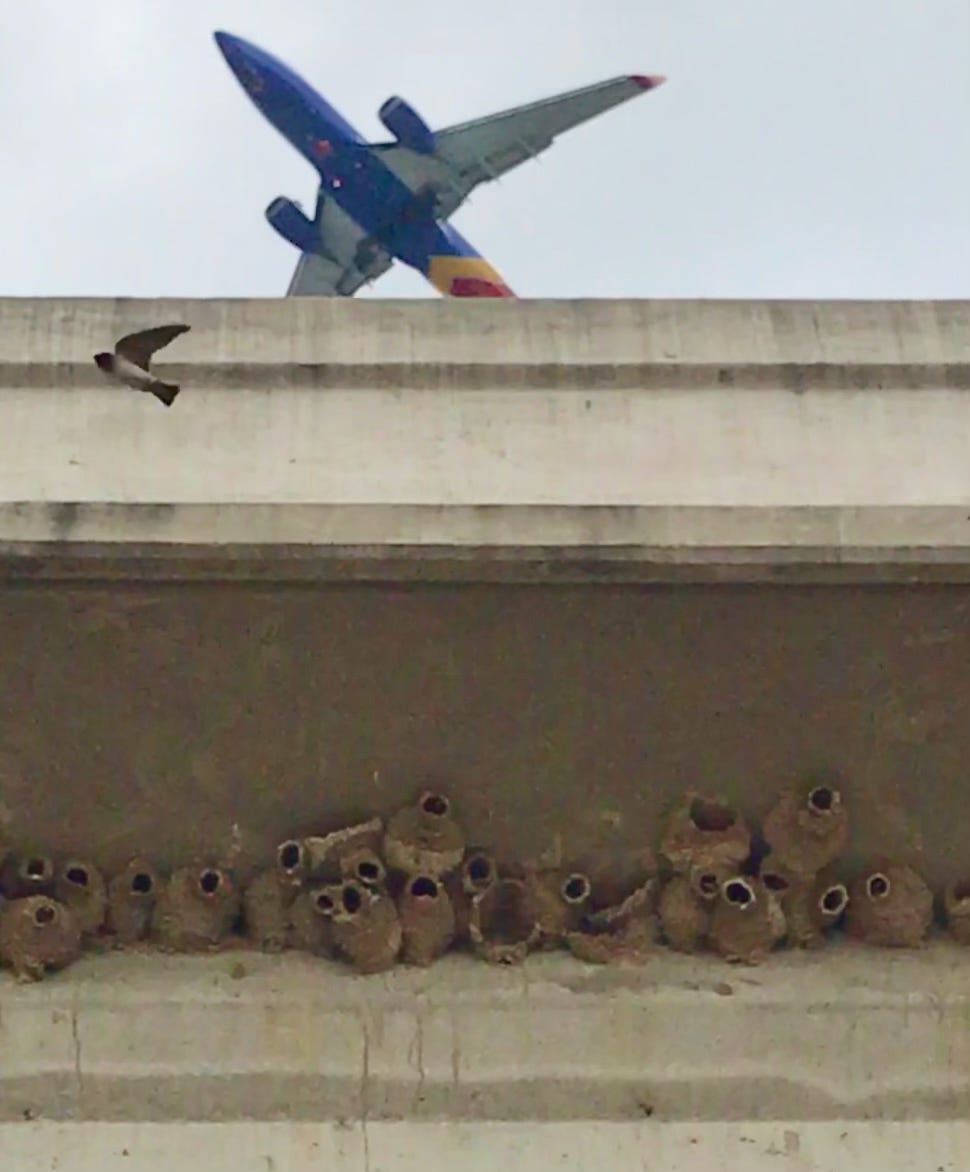
All of the sites were places I wrote about in the book, and have featured in this newsletter. An arboretum of ancient live oaks hidden behind a bus turnaround, the weird riparian woods behind the abandoned dairy factory, the stormwater catchment basin that hides the springs that are the source of Austin’s Shoal Creek, and an abandoned aggregate mine along the river that is early in the process of naturally rewilding. I made a 20-page zine with short pieces and photos about each site, with a letterpress cover beautifully printed by Max Koch of Koch Printing, and put a lot of thought into how to translate my usual process of experiencing these places in solitude and then writing oblique notes in the privacy of my home office into a guided tour and large group conversation that still had some of the feeling of getting lost and discovering strange things. The best moments were when we came upon and stopped to talk about things I hadn’t scouted, from the harvester ant colonies by the parking spots to a patch of powderpuff mimosa and the swallows under the 183 x Mopac flyover.
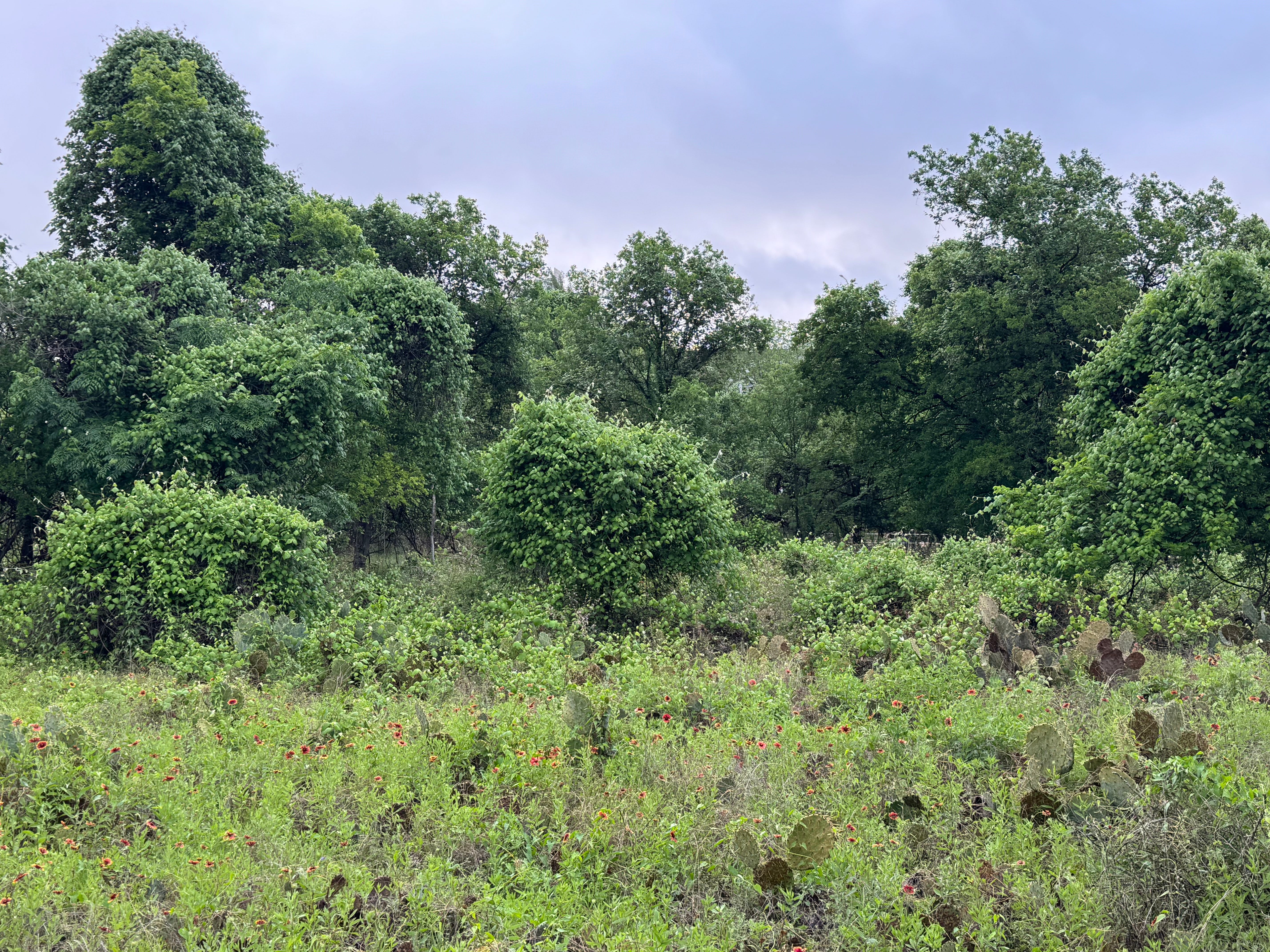
The first site was the most conventionally beautiful, and seemed to be in the easiest place to access, though the next morning after we’d walked it there were two stabbings nearby. The weather was remarkably cooperative, despite the walks occurring during a week of rain, including major downpours later in the day after a couple of the walks. So on the last walk, Sunday morning, we got the gift of finding the wasteland gone wild, when we crossed the pedestrian bridge over a tollway to find an unlikely 60 acres of prairie flowers in bloom around the abandoned towers, ramps and gantries of the aggregate mill. I knew I had imparted something of what I’d hoped for when, at the end of that last walk, the last of the participants to leave, a Chilango filmmaker named Manzo, looked at me as he got in his car and exclaimed with a smile:
“You took us to the Zone!”
That bit of feedback was the best to get, for one who was been seeking the place he mentioned since before I even knew it existed. And I’m not sure it’s entirely true, but hopefully I was able to share some learned insights about how to find your own way there.
Further reading
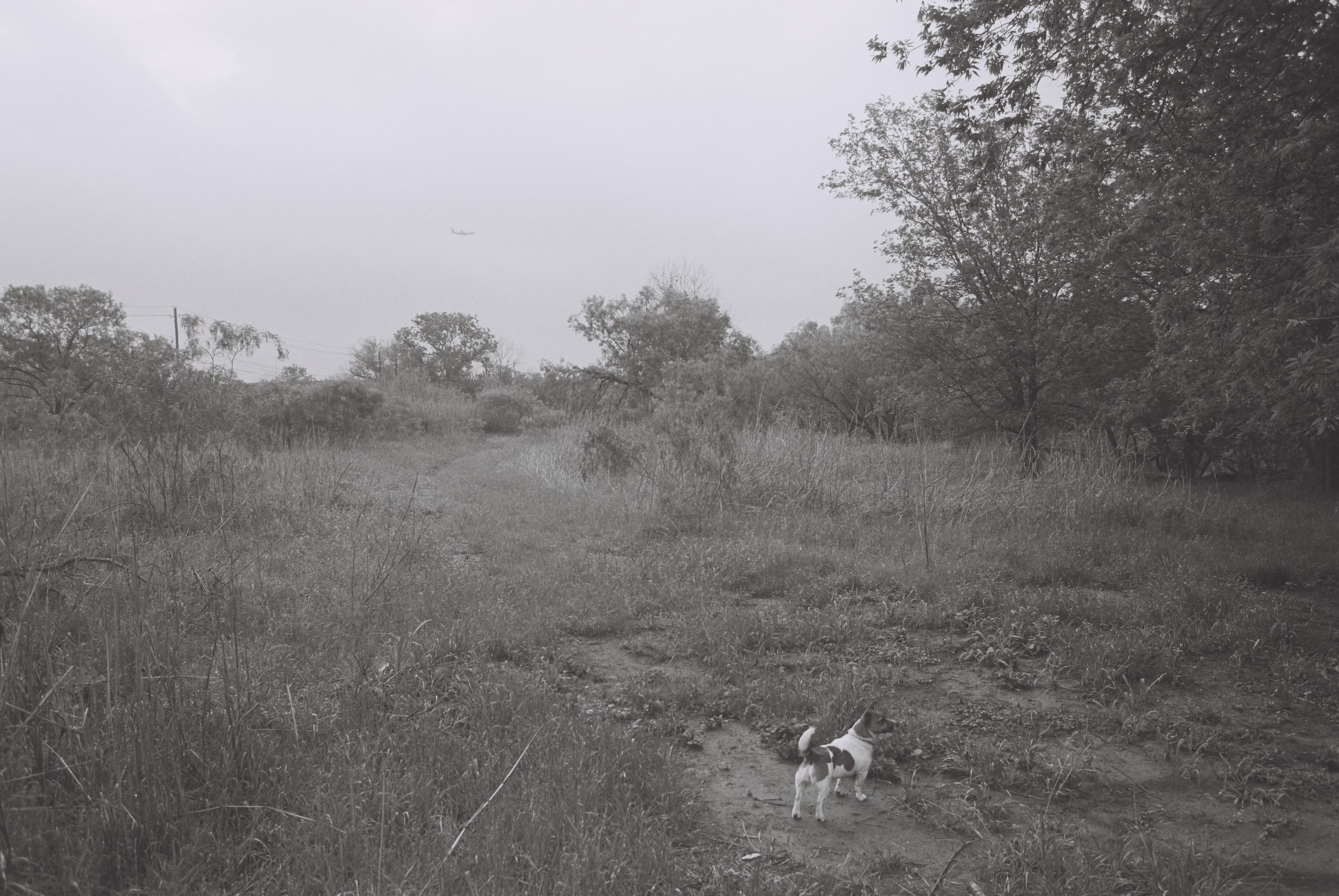
More about Tarkovsky’s Stalker and the Strugatsky brothers book Roadside Picnic from which it was adapted here in this post from January 2021. For a deeper dive, see Geoff Dyer’s ZONA.
The authors of that cliff swallow study wrote an acclaimed book on the subject, Coloniality in the Cliff Swallow, available from University of Chicago Press.
As mentioned in earlier posts, the Fusebox walks were limited to 25 people per walk, so based on the response I’m hoping to do more in the future (probably next year after I meet my next book deadline). If you’re interested in coming on one, shoot me an email (chris at christopherbrown-dot-com) and I’ll add you to the list.
This summer I will be looking for similar spots in other North American cities while researching the new book, so if you know of any you think I should check out, please let me know!
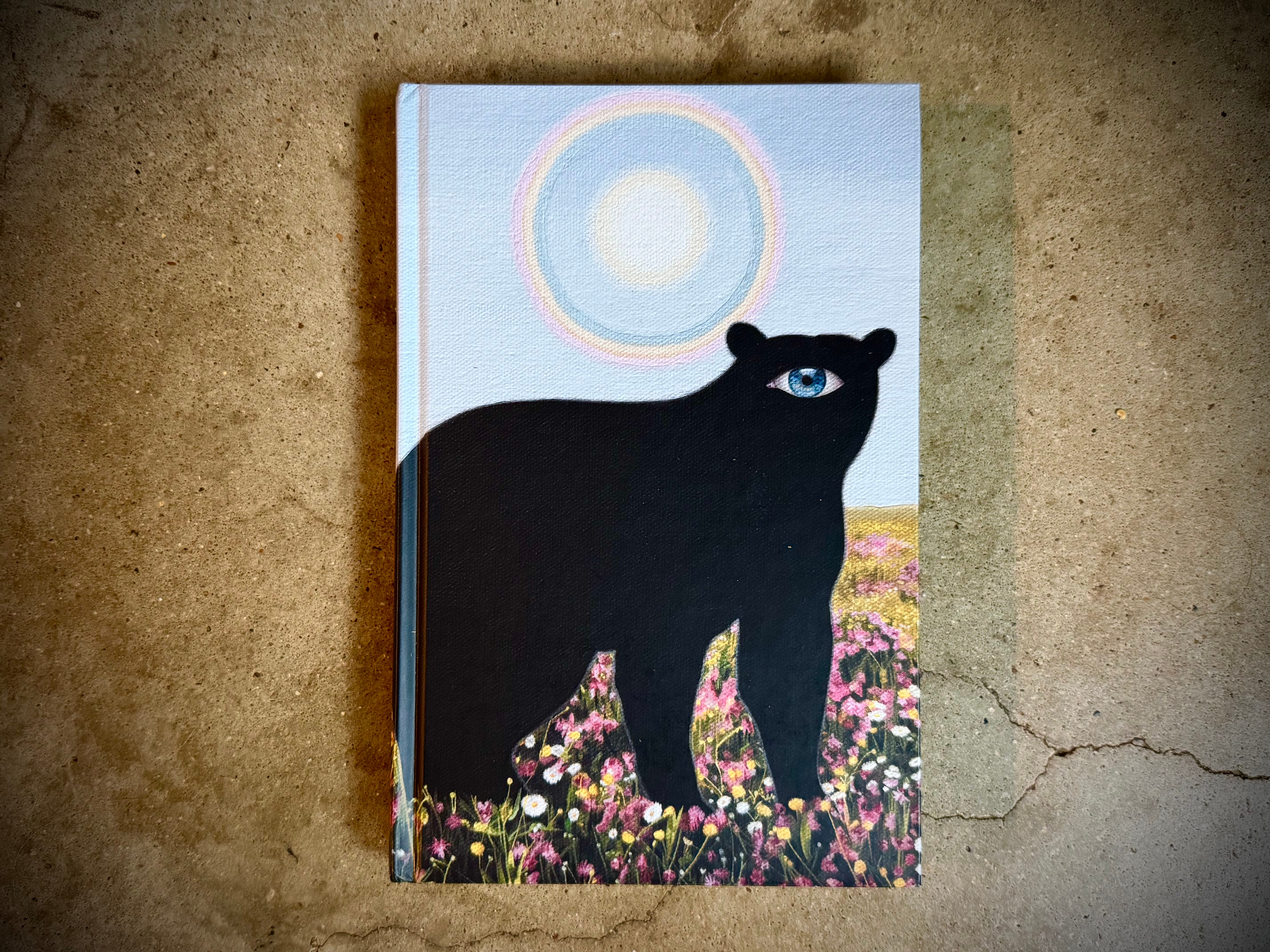
If you’re interested in getting a flavor of the material I’m developing for the new book, and/or reading a diverse selection of new writing about animals by other writers from around the world, check out the new anthology from Dark Mountain: Bestiary. My contribution, “Wild Cats and Predatory Robots,” builds on a sketch I started last year for the Writer’s League of Texas’ One-Page Salon, mixing field notes from sightings of crypto-jaguarundis and of autonomous nine-eyed Jaguars. Thanks to Joanna Pocock for the invitation to submit to what turns out to be an exceptionally beautifully designed and made book. It was serendipitous, as she reached out to me shortly after I had discovered the Dark Mountain Manifesto — a cogent call for a more honest approach to writing about the natural world and our relationships with it — while trawling the Austin Public Library stacks. Dark Mountain started in 2009, and this is issue 29, so I’m rather late to the party, but delighted to have found it.
On Earth Day I had a blast with two back-to-back events: a conversation with artist Emily Eisenhart and nature-focused brand developer Adam Butler at Cross Pollinate, a local small group gathering of folks working at the nexus of Central Texas urbanity and wild nature incubated by Adam and the amazing Butler Bros. team, and then a conversation at Alienated Majesty Books with political journalist Patrick Strickland about his first collection of fiction. Alienated Majesty has probably the best-curated selection of environmental writing of any bookstore on the planet, and you don’t need to be in Austin to sample it. (They also now have some signed copies of the paperback edition of A Natural History of Empty Lots.)
Another gift of Fusebox was getting to meet and see some remarkable new work from the choreographer Vanessa Anspaugh, whose Mourning After Mornings was a featured selection of the festival. I think Vanessa shares a similar perspective on our relationship with the natural world as I try to explore in my work, and it was really amazing to see that expressed through dance (and to learn that she had recently discovered Empty Lots thanks to the folks at Unnameable Books in Western Mass.).
As auspice, when Agustina and I walked to the UT dance building to see Vanessa and her collaborators’ rehearsal, we came upon this scene of snake trying to figure out how to swallow the fish it had just pulled from Waller Creek:
Here’s the zine we did for the walks. I have some extra copies I may put up for sale or donation—message me if you’re interested:
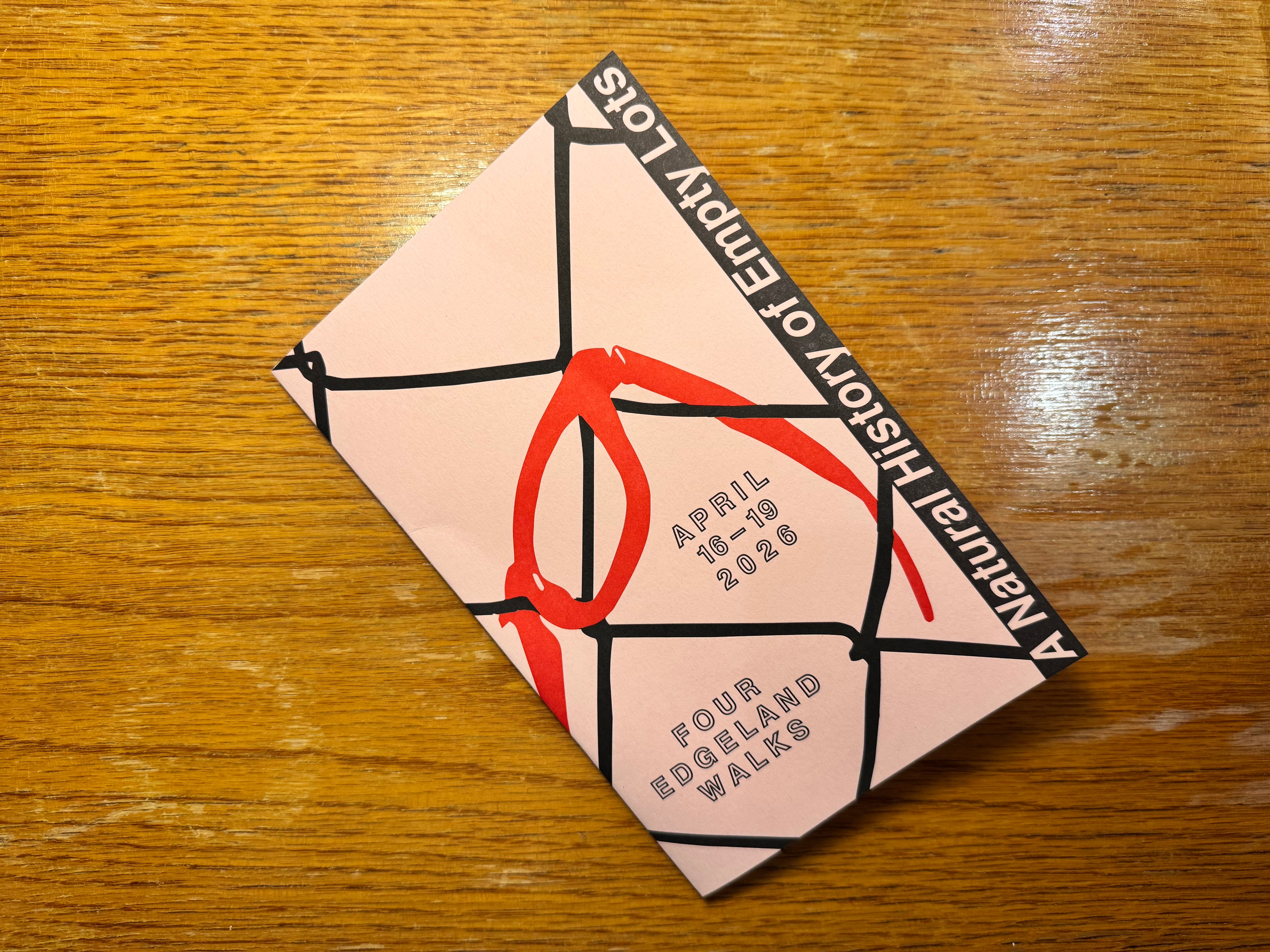
Lastly, below is one more shot of swallows that I love, a screen grab from another video taken the same day as the one included above. My son Hugo Nakashima-Brown, who was a little kid when we first saw these birds near this bridge, is now grown and making a career as a woodworker, furniture designer and visual artist. He has been experimenting with figurative marquetry using 21st-century tools, and made a beautiful door for our home featuring an interpretation of the below image in wood. You can see it here, along with his other work.
Have a great week, and stay safe.
May I share cliff swallows? https://substack.com/@amybrunvand/note/p-207438691?r=3aadnk&utm_medium=ios&utm_source=notes-share-action Also, I’m tangentially in the wonderful Dark Mountain 29. The photo “Cast of Characters” by Anna Picaro shows people wearing cardboard brine shrimp that I helped make, though I was not at the lake that day. These puppets were inspired by Eli Nixon “Bloodtide: a new Holiday in Homage to Horseshoe Crabs”— a book you should read if you have not yet read it.
You could have a thriving enterprise with the walks (à la Keep Austin Weird).