The arrival of our cool season was confirmed last Friday afternoon when I got home a little bit after 4 p.m., and found the armadillo who lives in our side yard out foraging exceptionally early. He was there to greet me at our front door Thursday, too, but that was at the more typical crepuscular hour, as the sun was beginning to set around 6:30. This was when the sun was still high in the southwestern sky, super bright, and the warmth of the day peaking at 84°F. In the triple-digit summer, armadillos are nocturnal, for reasons that appear to have more to do with temperature than danger. It is only in what passes for winter that one sees them in daylight with much regularity—usually after it gets genuinely cool, like below 60°F.
Armadillos are also pretty blind, so if you are reasonably chill they will let you get rather close. Yesterday the little bull let me watch him long enough to take note of the mosquitoes and gnats circling his butt, as if looking for a way to feed on it. And to get some better-than-usual video that captures the animal’s husky, cartilaginous karma:
As Halloween approached, Octavia and I saw a lot of cool birds: a peregrine flying over the house one morning, a red-tailed hawk alighting on a tall street lamp along the I-35 frontage road near her school another morning, and Thursday night two beautiful barred owls on a telephone pole, at the edge of the park they made where a power plant used to loom over the neighborhood. We were walking the dog near grandma’s house, and probably wouldn’t have spotted the owls but for the motion of one as it came in to land and join its mate just as we were approaching. They were in shadow, but there was enough ambient light to see their silhouettes if you knew where to look. I taught Octavia their call, an easier one for humans than most bird songs. Our effort got a curious gaze from the male, turning to reveal his paler face. Maybe next time we’ll be able to elicit a true answer.
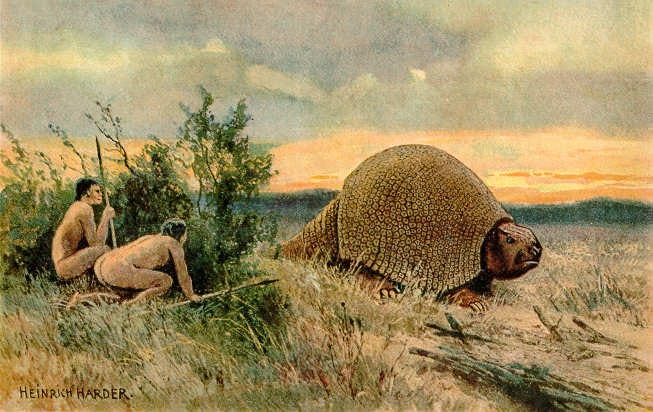
That Sunday as we left the skate park Octavia said we should go to the natural history museum, so we did. In the paleontology gallery, I pointed out the carapace of one of the Volkswagen-sized armadillos that once roamed this landscape, and tried to explain to our second-grader how that species and the other Pleistocene specimens on display all went extinct around the time humans arrived on this continent. Explaining the still-debated question of correlation versus causation proved harder.
For most of the summer, a minotaur roamed loose not far from our home. A black bull somehow freed itself and found its way to an acreage of open land that the maps designate as a municipal park, but is really an old cement mixing yard purchased by the city 16 years ago that has been left alone and slowly rewilding ever since. Located between the river and the tollway, it’s a darkly charismatic place where left-behind concrete relics acquire the totemic qualities of accidental land art as they are overtaken by nature, wildlife abounds in equal measure with weird humans, and the chances of encounters with the uncanny are high. The appearance of the bull represented a confluence of all those qualities.
I first saw the bull in late June, exploring the site with my friends Evan and C. Rees. C. wrote a really great poem about the rogue “Minoan hybrid” mapping out its limits, and Evan captured a little bit of proof:
At the end of August, I just learned, the authorities tranquilized the bull, dragged it by the horns, and took it captive, after residents of the adjacent subdivision complained about it when they should have been celebrating it, if not making votive offerings to it. The park rangers even did the creature the additional injustice of posting pictures of its capture to Facebook accompanied by snarky text. None of the online discussions of the bull bother to explore the mystery of its origin, or the majesty of its evident self-liberation.
After my brief communion with our side yard armadillo Friday afternoon, I decided to ride my freshly tuned old single-speed mountain bike down to where the bull had enjoyed its summer holiday, partly as a test run for some urban bikerafting research trips I have planned. I even loaded my packraft, strapped to the handlebars, but by the time I found a good put-in I had less than an hour of light left, so I decided to ride over to the other side of the river and see what’s up in Austin’s newest municipal addition.
As previously discussed here, the area of far east Austin known as the Dog’s Head (for the way the bends in the river outline its landform from above) was the subject of an immensely controversial and openly anti-democratic decision by the municipality earlier this year to annex a zone of old aggregate mines just outside the city limits and enter into a development agreement with a local real estate firm that gives the developer almost complete discretion about how to turn the area into something that will maximize the tax base. No environmental assessment, despite the site’s miles of frontage along our remarkably natural, clean and green urban river, almost no real zoning regulations, unlimited freedom to modify the floodplain, and with just one planned tenant revealed: Amazon Robotics.
It was a beautiful day to head there on a bike instead of in a car, at least for one who has a predilection for taking seemingly inhospitable paths to interesting places. I followed the frontage road over the river, crossing the highway at an intersection that, when you are in it, you would have trouble believing is surrounded by pockets of urban wilderness. My favorite street over there, a very long block of eccentric single-family homes and one modest trailer park perched on a high bluff, had its entrance hidden when they turned the old highway into a high-speed tollway, but I found my way in over a median, and once I got there I was pleased to see the street remained in character as the sort of place the kids might get lost in a Texas Chain Saw Massacre sequel.
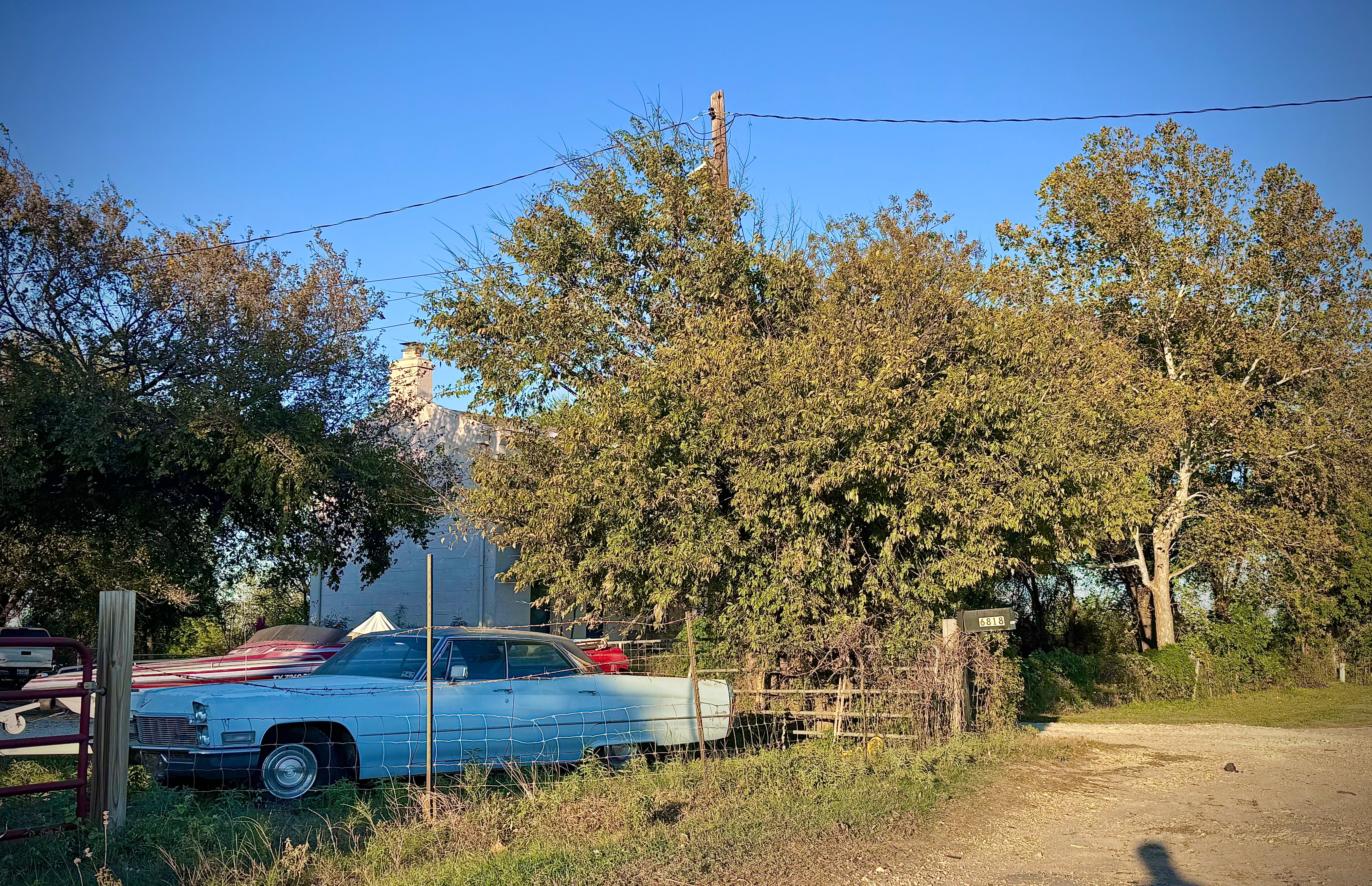
But when I got to the end of the street, I started to see the change. An old cattle ranch with its signs and flags still up at the entrance, but the operation obviously shut down, a huge zoning change notice posted by the fence, and a surveillance pylon on the other side of the drive. A little further, after the right turn onto the connecting road, bigger signs, and glimpses of massive acreages of site prep—what looked like miles of freshly scraped earth on the next terrace down toward the floodplain.
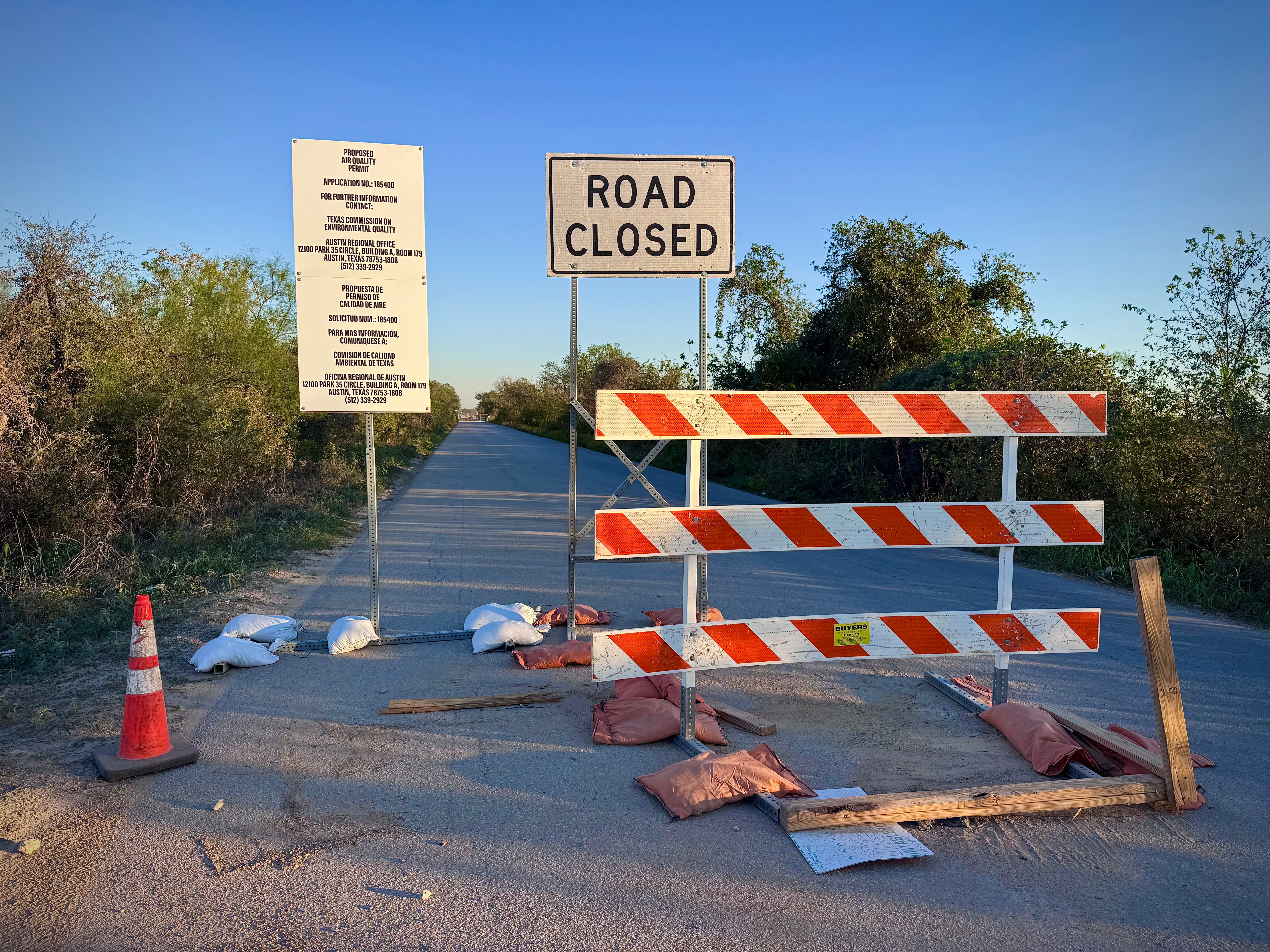
I rode on, down a road scarred with the heavy wear of all the trucks that had come and go carrying their heavy mineral loads over the years, and spotted with roadkill. I came upon a half-hearted road block marked with notice of the application for an air quality permit with the state environmental regulator. I kept going a little further, into a stretch that had site work underway on one side, while on the other side close to a dozen scissor-tailed flycatchers cavorted on the power lines and hunted the big overgrown field you could see stretching halfway to the airport. The quiet song of the flycatchers could barely compete with the clanking metal sounds of big earth movers at work somewhere close by but out of sight.
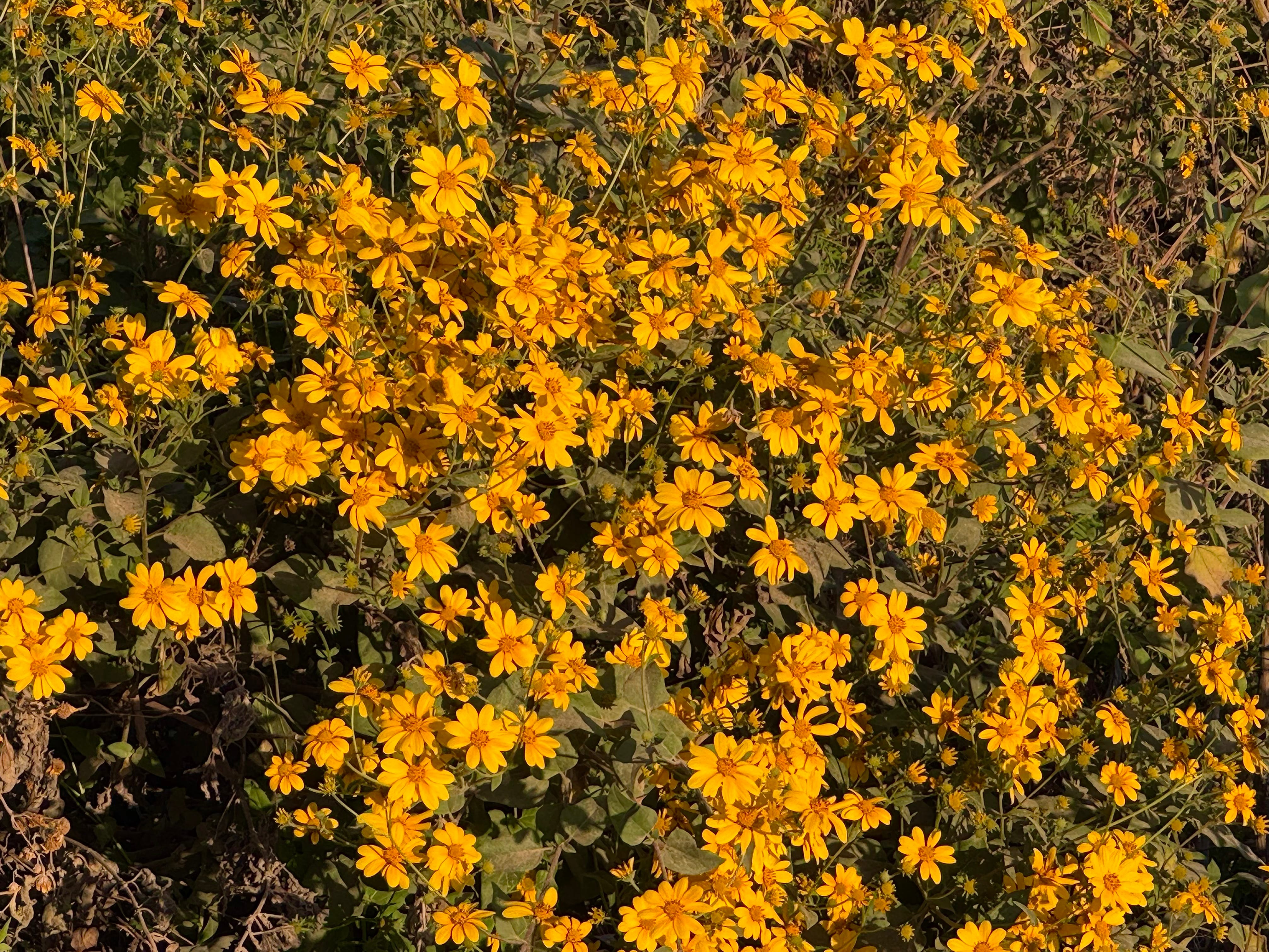
I got as far as the spot where the road really was blocked, by a temporary chainlink fence, and by a security guard sitting in his vehicle. The late autumn wildflowers were beautiful, goldenrod and really thick patches of goldeneye:
I had to turn around there, but found a different route back, down a narrower and shadier lane. Later, I looked up the air permit, confirming it was for the Amazon Robotics assembly plant that had been announced in the City Council development debate. I read the lists of compounds proposed to be emitted, and wondered how often and in what concentrations they would be blowing our way.
I rode back the next morning, aiming to see the site from the other side. I followed the tollway frontage road further, admiring the ancient oaks still intact along vestigial stretches of the “Old Bastrop Highway” that is a remnant of the Camino Real. In the creek bottoms on the east side, I could see two huge encampments in the scrubby woods, one of which had recently burned.
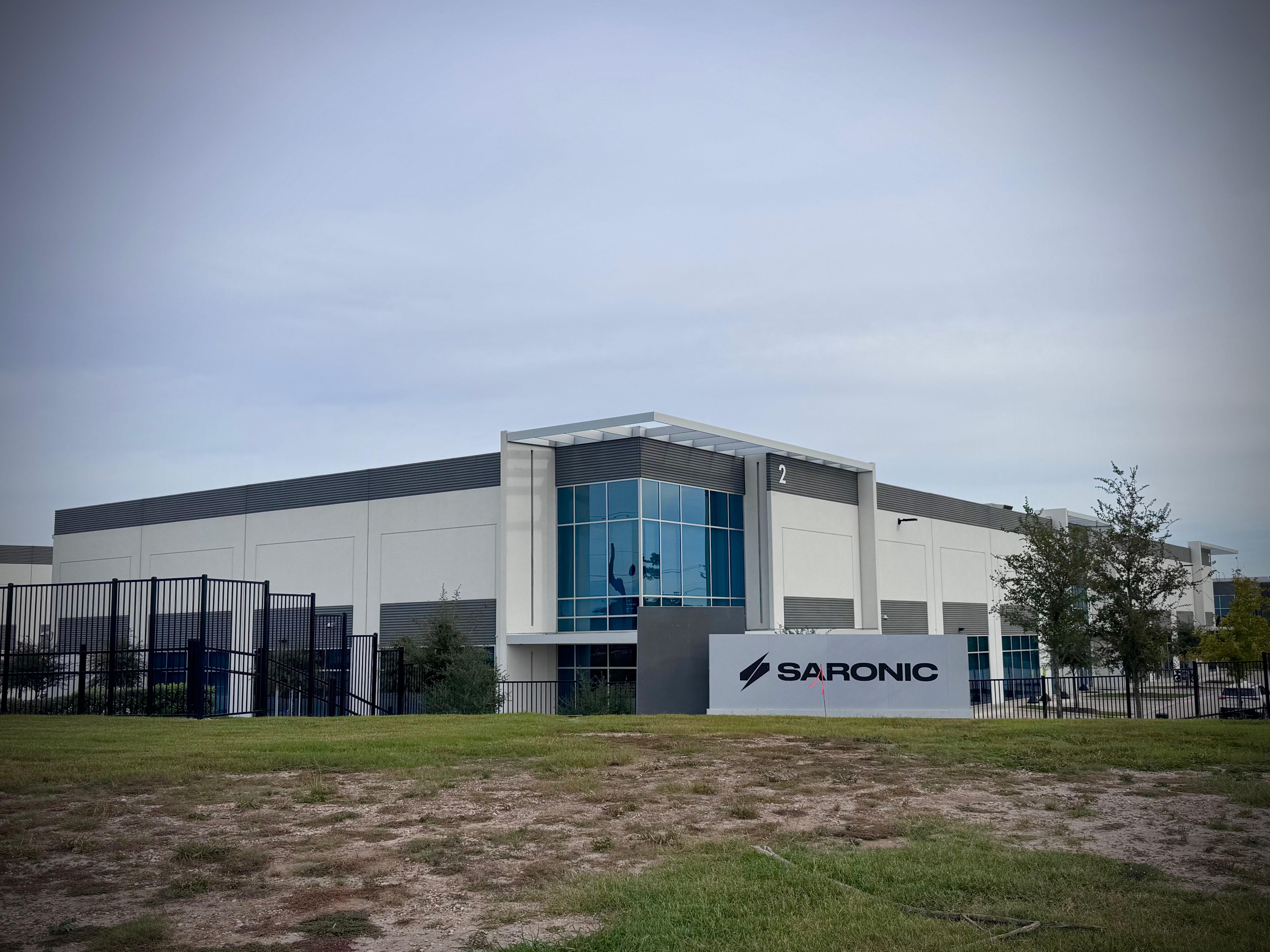
In the next block was the recently constructed new corporate headquarters of Saronic, the marine drone manufacturer that got a lot of press this summer after its unmanned boats rescued two military aviators downed in the Persian Gulf by the Iranians (and some reports started looking at how it got to the front of the procurement competitions). As soon as I stopped to take a picture, a little security car rolled up, following from inside the iron fence as I rode on around. You could see a few folks were working, even though it was 10 a.m. on a Sunday.
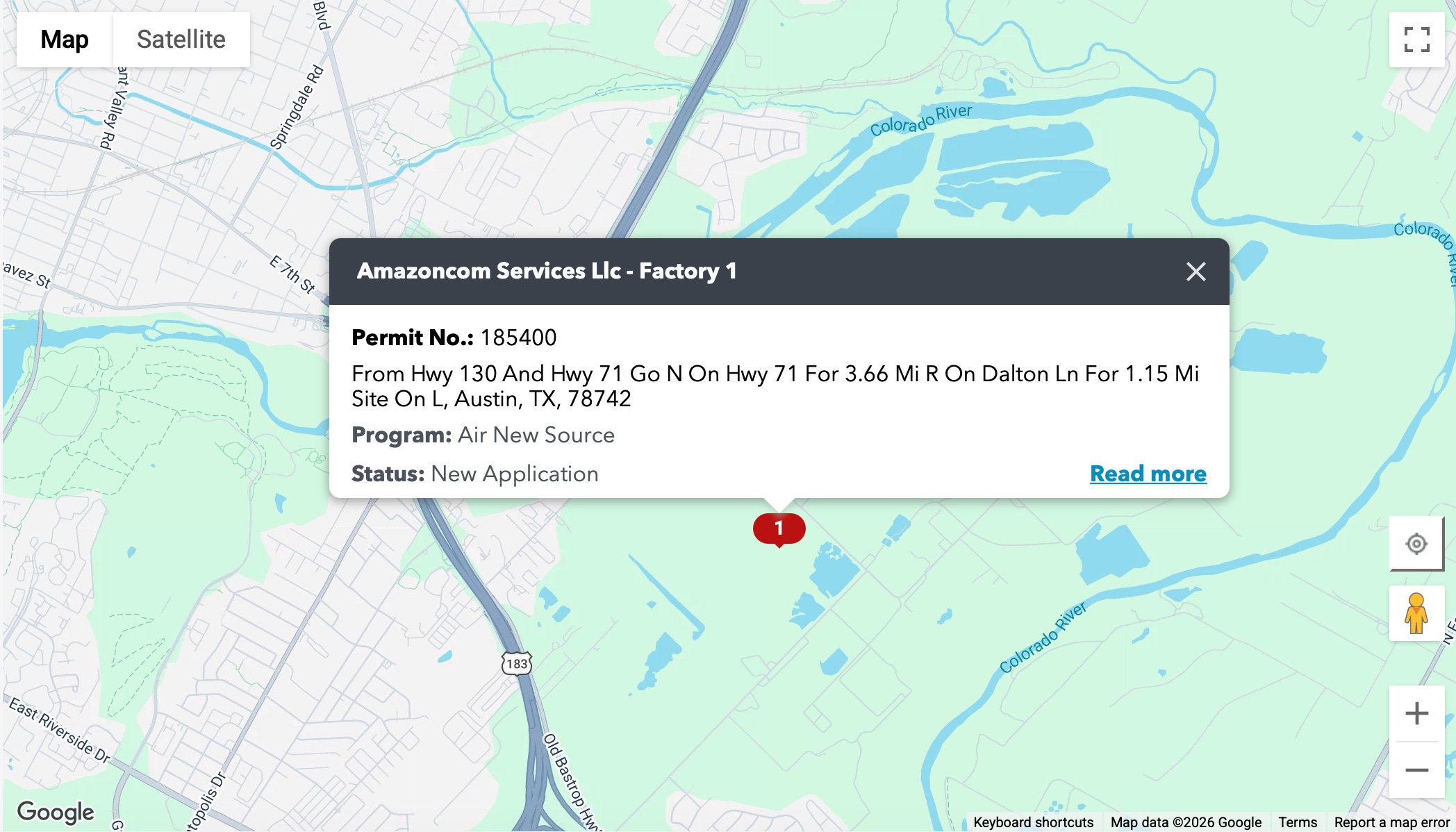
On the other side of the facility I found one of the long old roads that penetrates the Dog’s Head: Dalton Lane, the namesake of which seems lost to history, a road that originally accessed old ranches along the river and its expansive floodplain, then the aggregate mines that harvested the alluvial deposits in the floodplain to build the city we live in. Geographically, the Dog’s Head has long existed as a kind of secret peninsula: a big bend in the river bounded by highways and the airport that used to be an Air Force base, land that could profitably be left for the most primitive industrial and pastoral land uses into the first quarter of the 21st century, when the growth its old river rock helped provide the foundations for finally caught up with it.
A mile or so down that road, after passing a recently abandoned greenhouse and a secondary Saronic facility, I came upon the site of the new Amazon Robotics factory: a scraped plain that stretched almost as far as I could see in every direction, the Austin skyline visible along the horizon to the west:
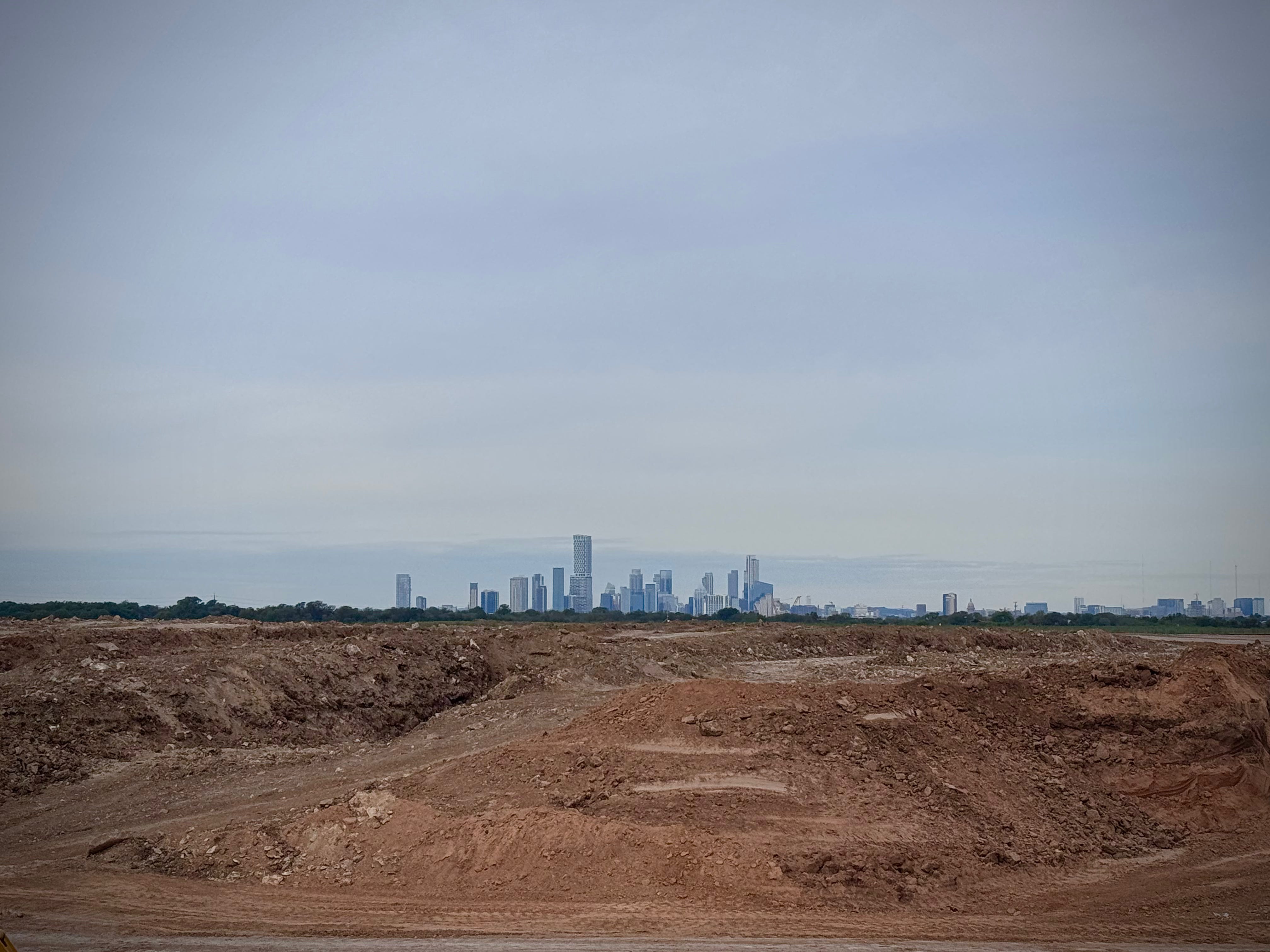
The only work underway was that of two surveyors measuring metes and bounds along the road, oblivious to the weirdo riding through, and a lone mechanic tending to the long row of yellow earth movers and dump trucks lined up beyond the gate, not far from the arrays of concrete storm sewer pipe ready for installation. The developer’s website describes the work that I witnessed as a restoration of land scarred by decades of mining, and the main project lead described to me over coffee recently Amazon’s vision for a re-greened site. Maybe it’s true, and after the robots take on all of our dangerous and miserable labors, we will be free to pass the days in the rewilded garden outside. It will still be just a garden, another effort to simulate the natural landscapes we have razed.
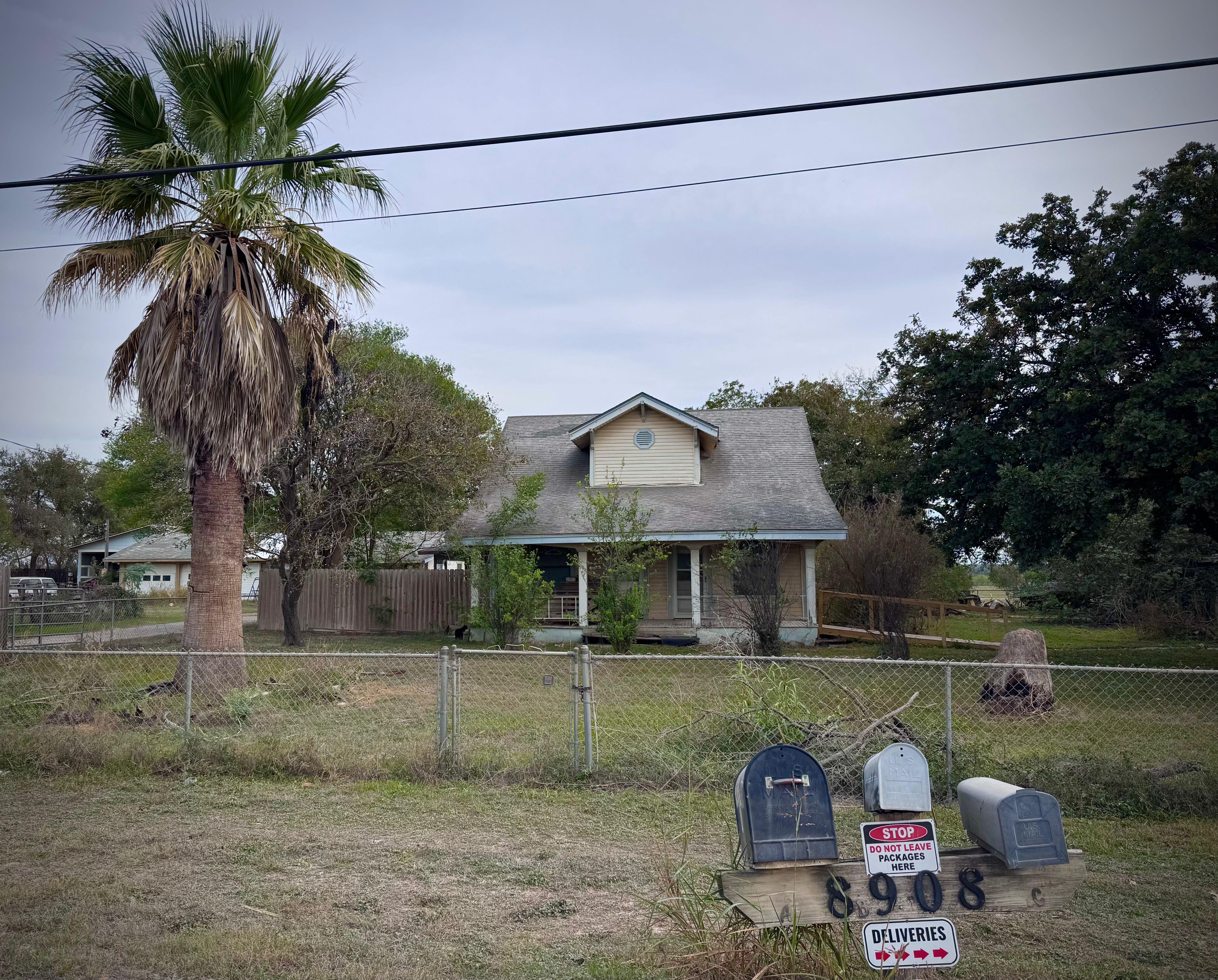
Further on, there was one sand and loam yard still in operation, and a landscape supply company with its sprinkler heads hydrating the hillocks of fragrant compost. Past there, the roads became more labyrinthine, every one marked with a sign that warned “No Outlet” but I knew might lead to the river. Down one of those I found a cluster of three old homes. They looked abandoned, even though there were some cars out front gathering dust, the only sign of life a black cat that jumped out from under the mailbox of one when I stopped to look more closely. Gone to Croatan, or maybe retired to Florida after selling the old homestead to the developers.
As I rode back out, I stopped at the sound of familiar birdsong, and then spotted them: two kingfishers hazing a red-shouldered hawk along the road opposite the Amazon site, perhaps fighting over the habitat that remains.
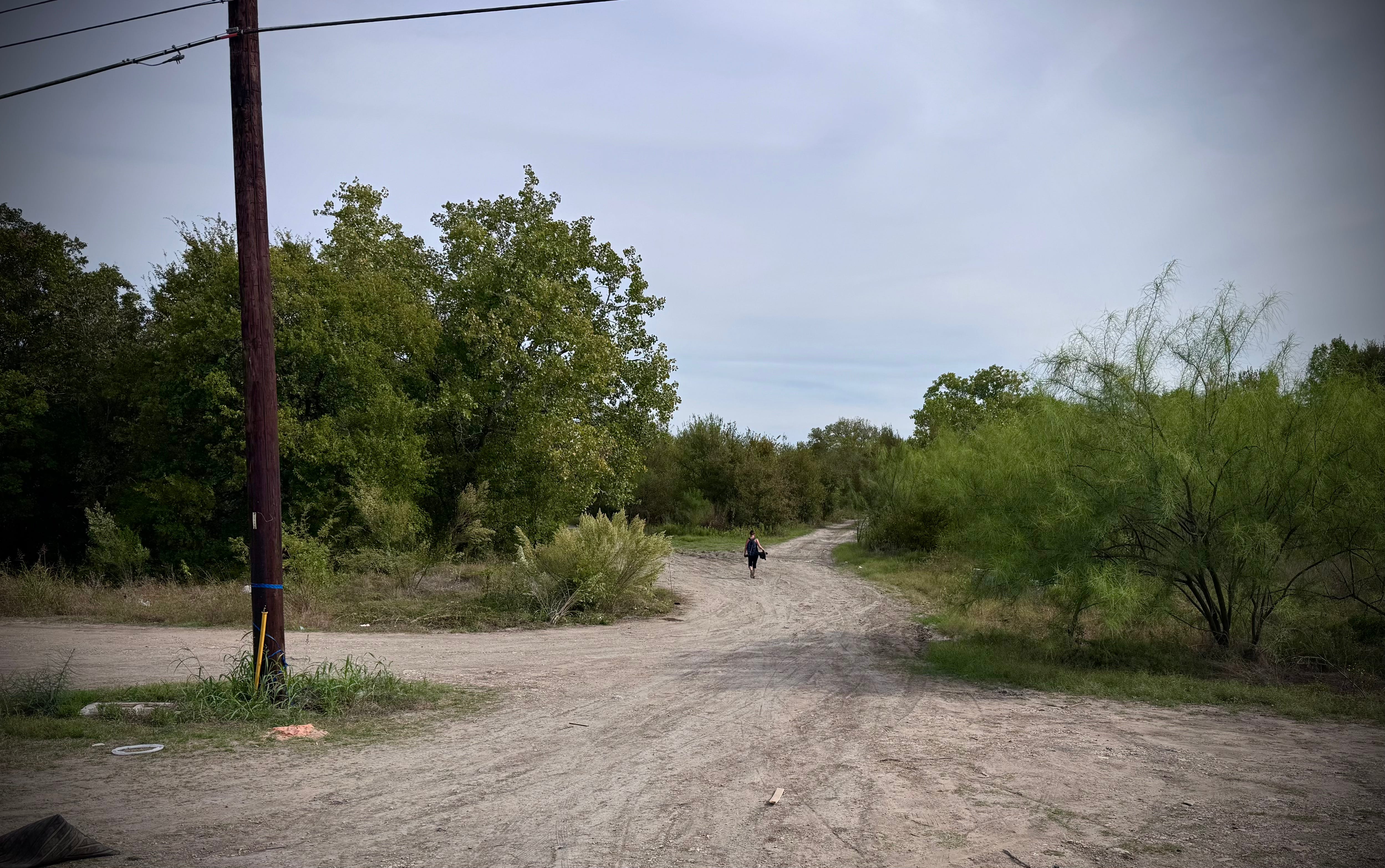
On my way back along the frontage road, I saw a lone woman walking down into the zone where I had seen the campsites. The momentary vignette recalled a Romantic painting, or a movie still—lone figure at the fork in the road, moving between worlds. She looked fit and strong, dressed in tank top, capri-length pants and rugged sneakers, and carrying a long object wrapped in dark cloth and strung over her shoulder and across her back like a quiver or a sword. She could have passed for an elven denizen of Middle Earth, or a healthy human survivor of the Walking Dead. The divergent futures are already here, if you know where to look.
Extra Credit
Monday I found myself on the river along the northern edge of the Dog’s Head, as a participant in a group paddle led by the artist Marie Lorenz and guides from the Texas River School. Lorenz is among the artists featured in the group show How to Grow the Cowpea: Survival Strategies from the U.S. South at the UT Visual Arts Center, and has a piece called “Graybelt“ that considers the river and its complex Anthropocene ecology as something different than a greenbelt. We had a beautiful day, and a big group of faculty, curators, handlers and artists, most of whom were experiencing the wonders of our urban river for the first time. Only at the end of the day, as we gathered around the campfire, could you hear the earth movers at work.
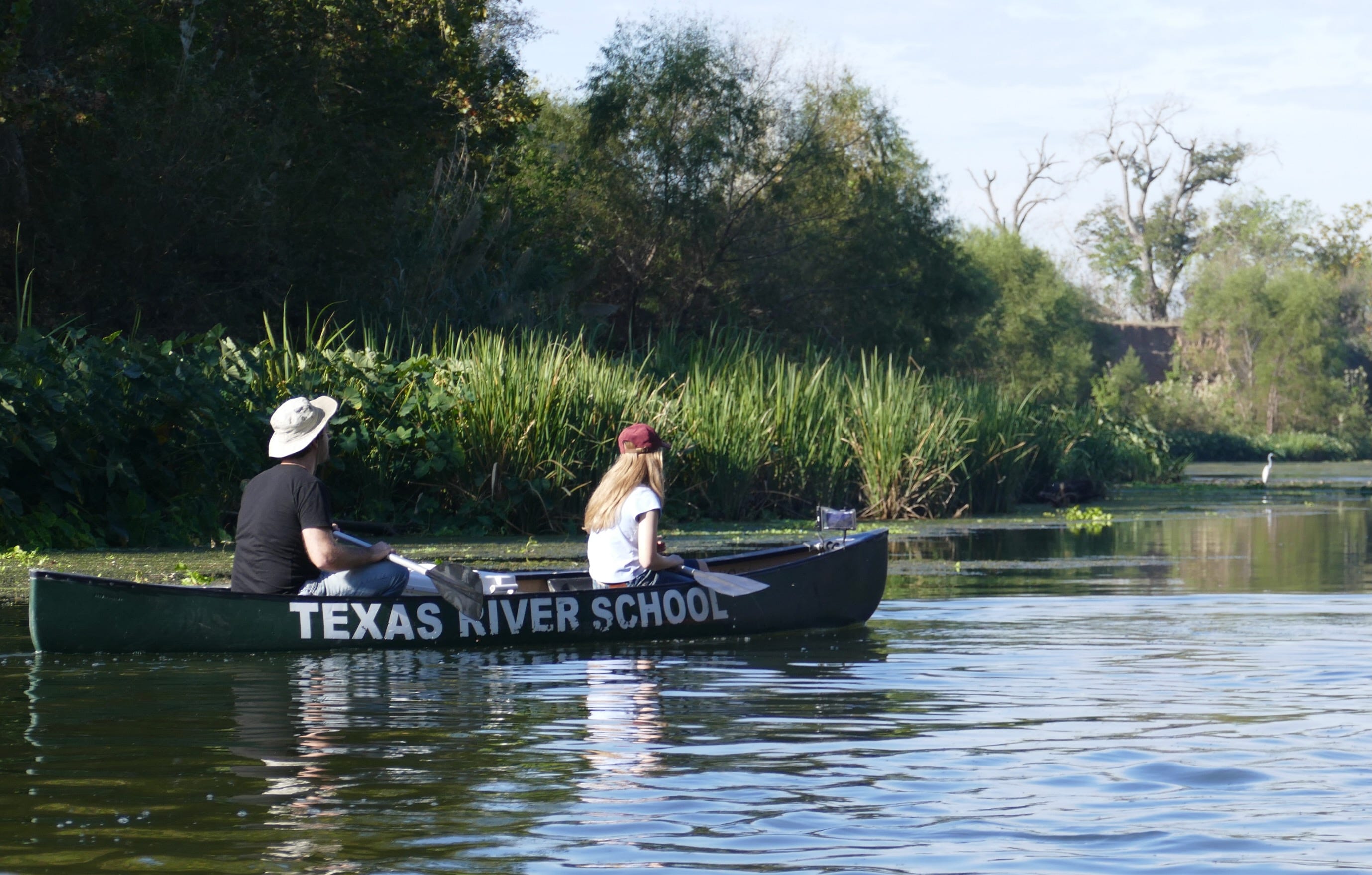
If you’re interested in getting out on the river yourself, the Texas River School team can hook you up.
Week before last I had the pleasure of seeing a similar show on display at Texas State: Thus Water Flows Over Weeds, a group show curated by Bethany Johnson featuring works by Texas State-affiliated artists that “consider nature as a site of sustenance, wonder, estrangement, and destruction, exploring the tensions and contradictions inherent in the human relationship with the environment.” Some cool pieces from emerging artists, now extended through November 13—see it while you can. Thanks to the school for having me down to participate in the panel.
For a documentary recap of the Dog’s Head, and how development politics work in Austin, check out this compelling new film from Steve Mims and Austin Free Press:
If you’re curious what kinds of pollutants will be emitted by Amazon’s robotics plant, you can read the permit summary here.
On Monday’s paddle I had the pleasure of meeting environmental historian C.J. Alvarez, and hear more about the amazing new book he is working on centered on the Chihuahuan desert. For now, you can go read his 2022 book, Border Land, Border Water, available from UT Press.
In the mailbox when I got back from the paddle was my copy of historian Steven Stoll’s amazing new book Land: A History in Seven Words, out from Yale University Press, which I was fortunate to read as a manuscript and provide a blurb for. A beautifully written multi-disciplinary exploration of the human relationship with our environment from deep prehistory to the emergent future, it’s one of the best books I got to read in the past year, and highly recommended for anyone who enjoys this newsletter or dug A Natural History of Empty Lots (which gets a nice discussion toward the end of Land).
For more on the poetry of C. Rees, check out their new debut collection Noctuary, available from Host Publications.
Thanks to fellow escapee from the real Tropic of Kansas Luke McGowan-Arnold and the editorial team at The Metropolitan Review for this fresh take on the weird genre of Second American Civil War novels, including my own.
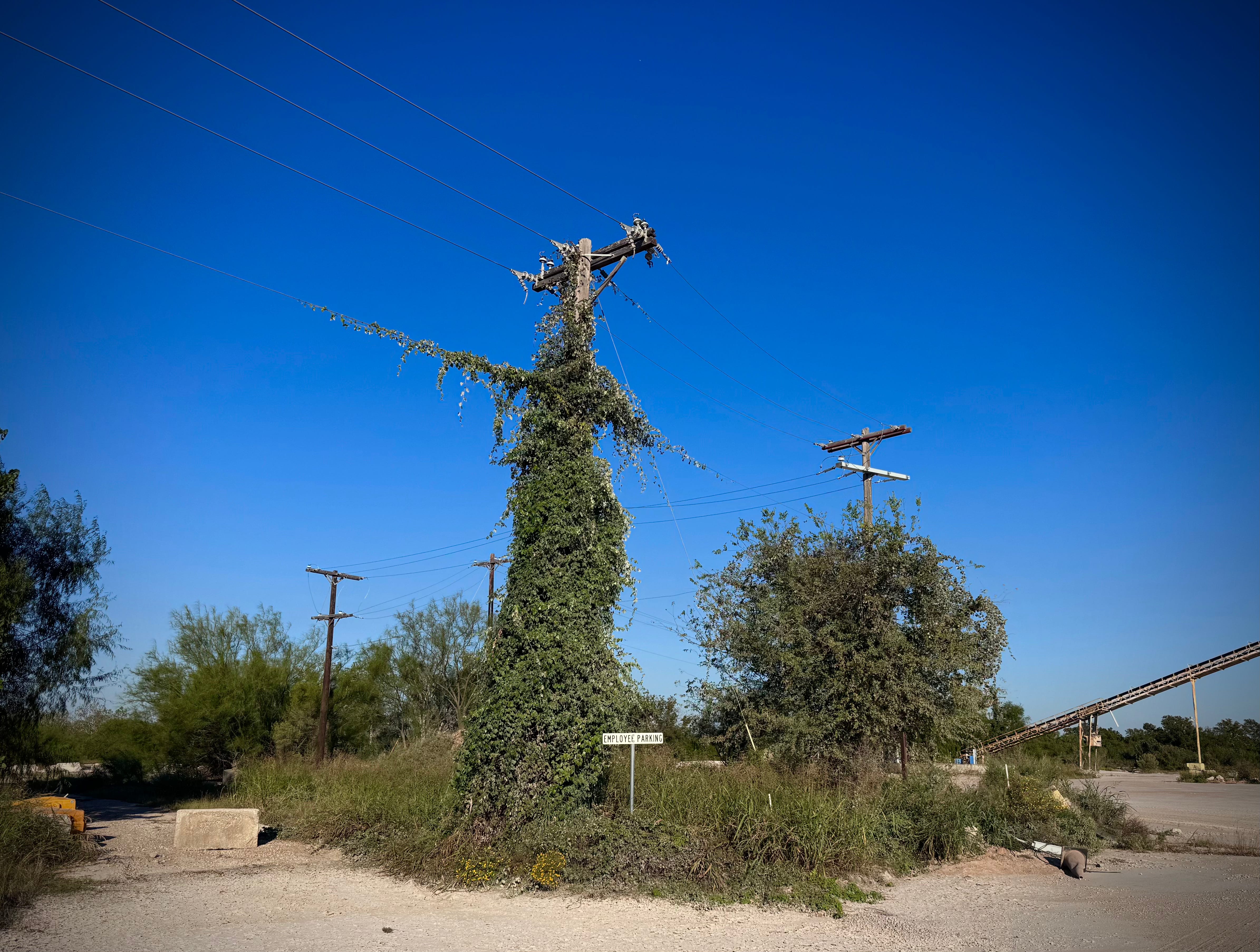
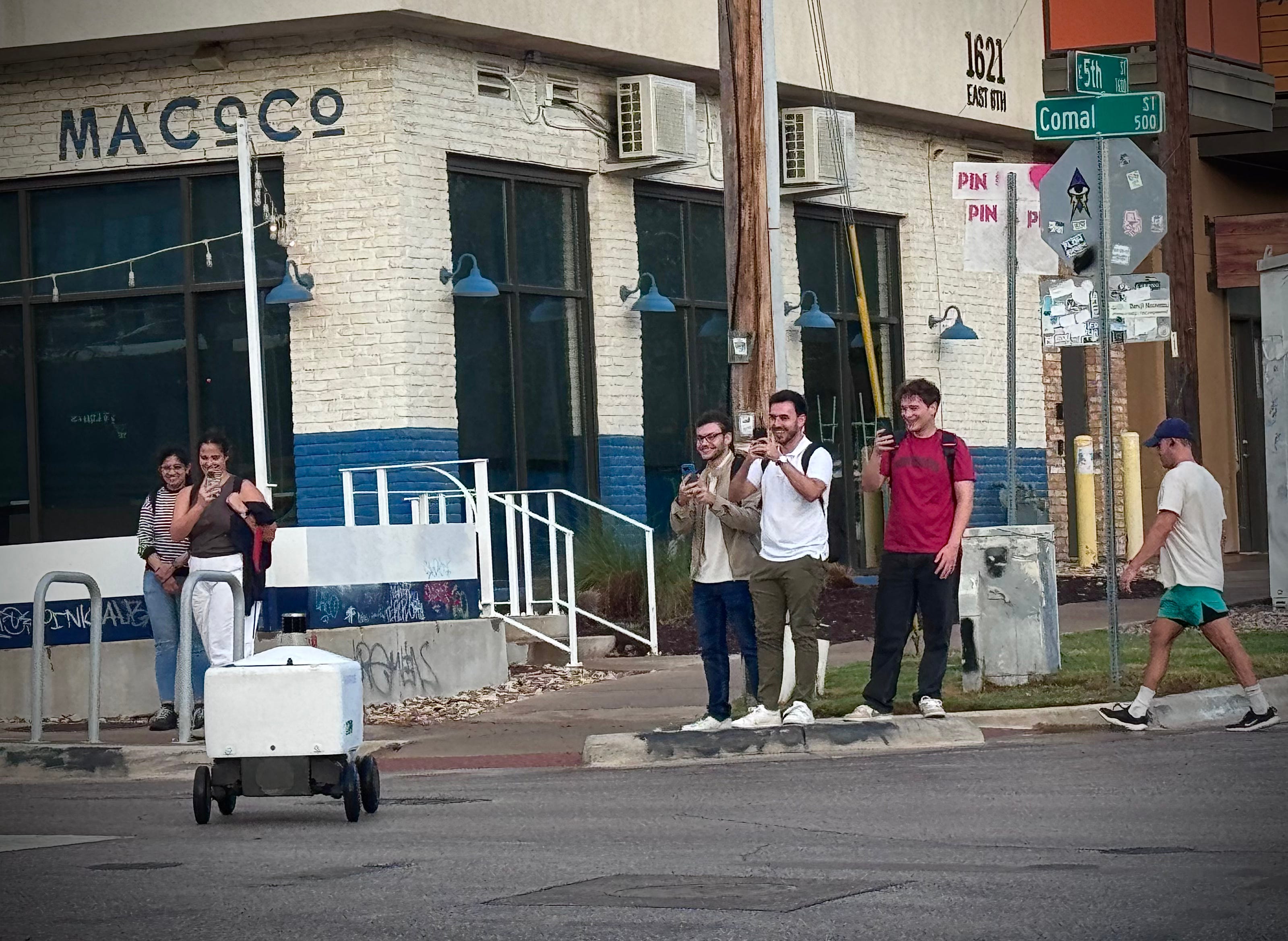
On the subject of robots, the dystopian captions practically write themselves some days driving around Austin:
The monarchs are here, and I have seen a few over the past week, but I worry their numbers are diminished.
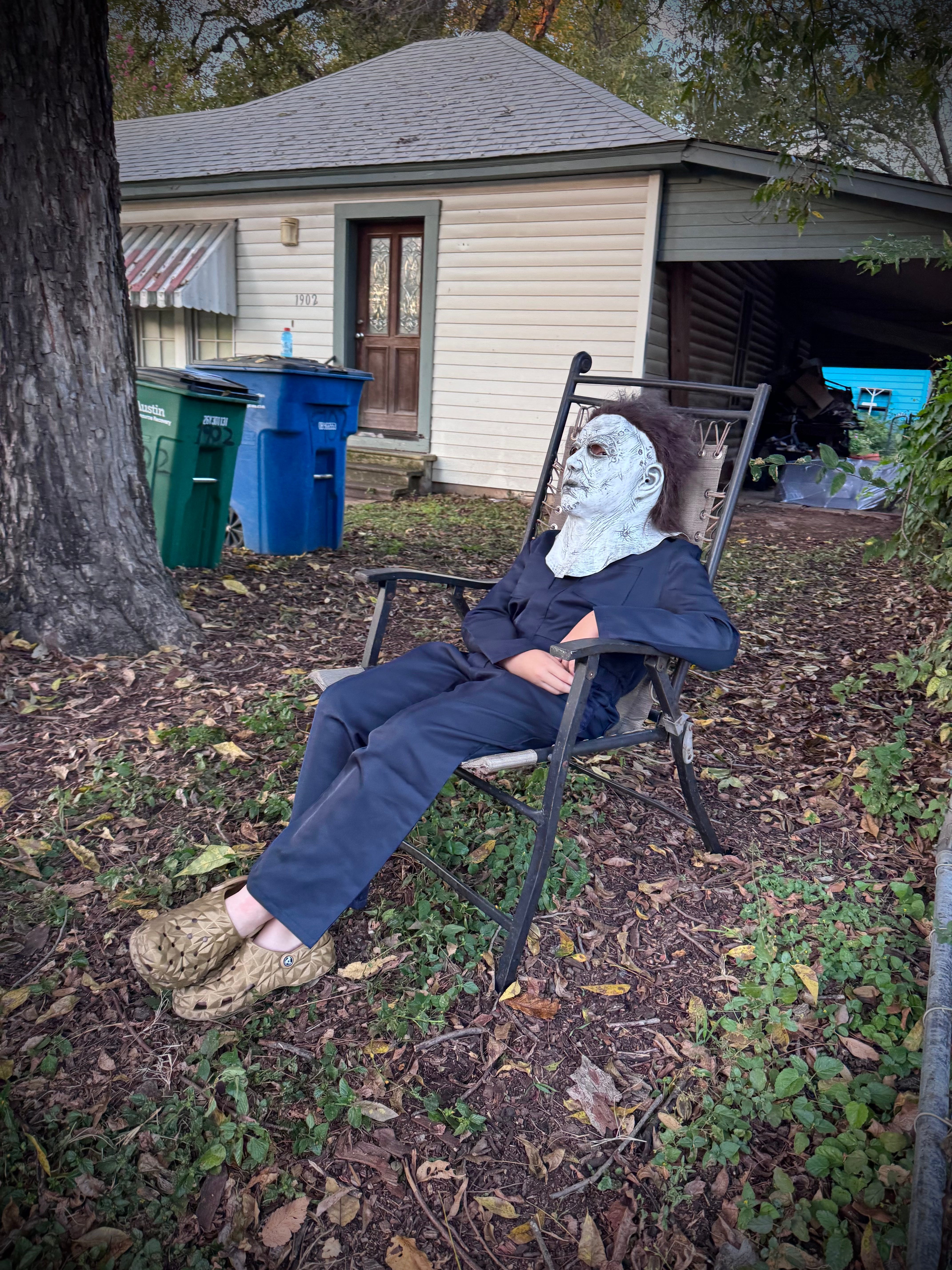
Enjoy the extra hour we just got back, and don’t forget to vote if you haven’t already. Kid Leatherface is watching: