

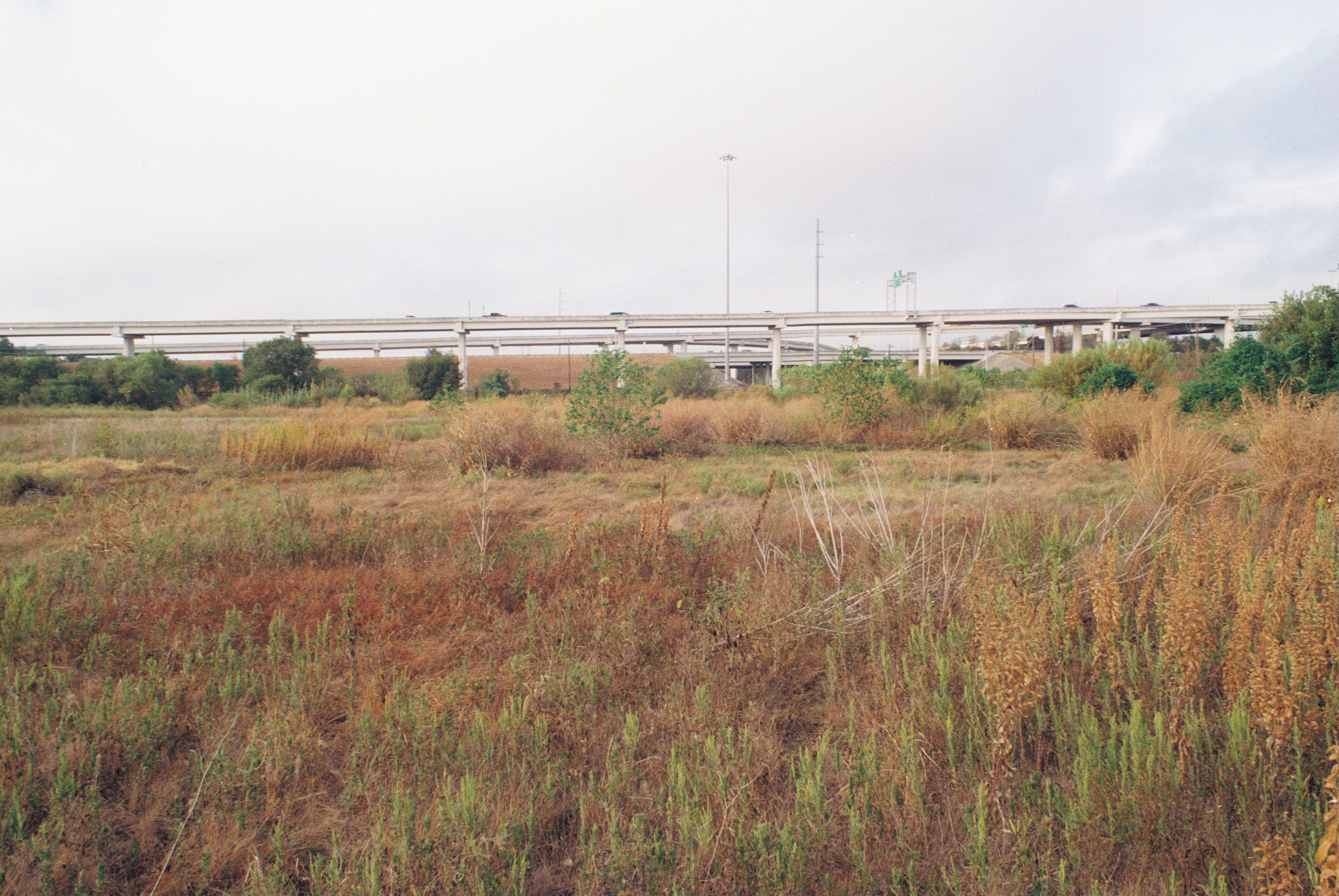
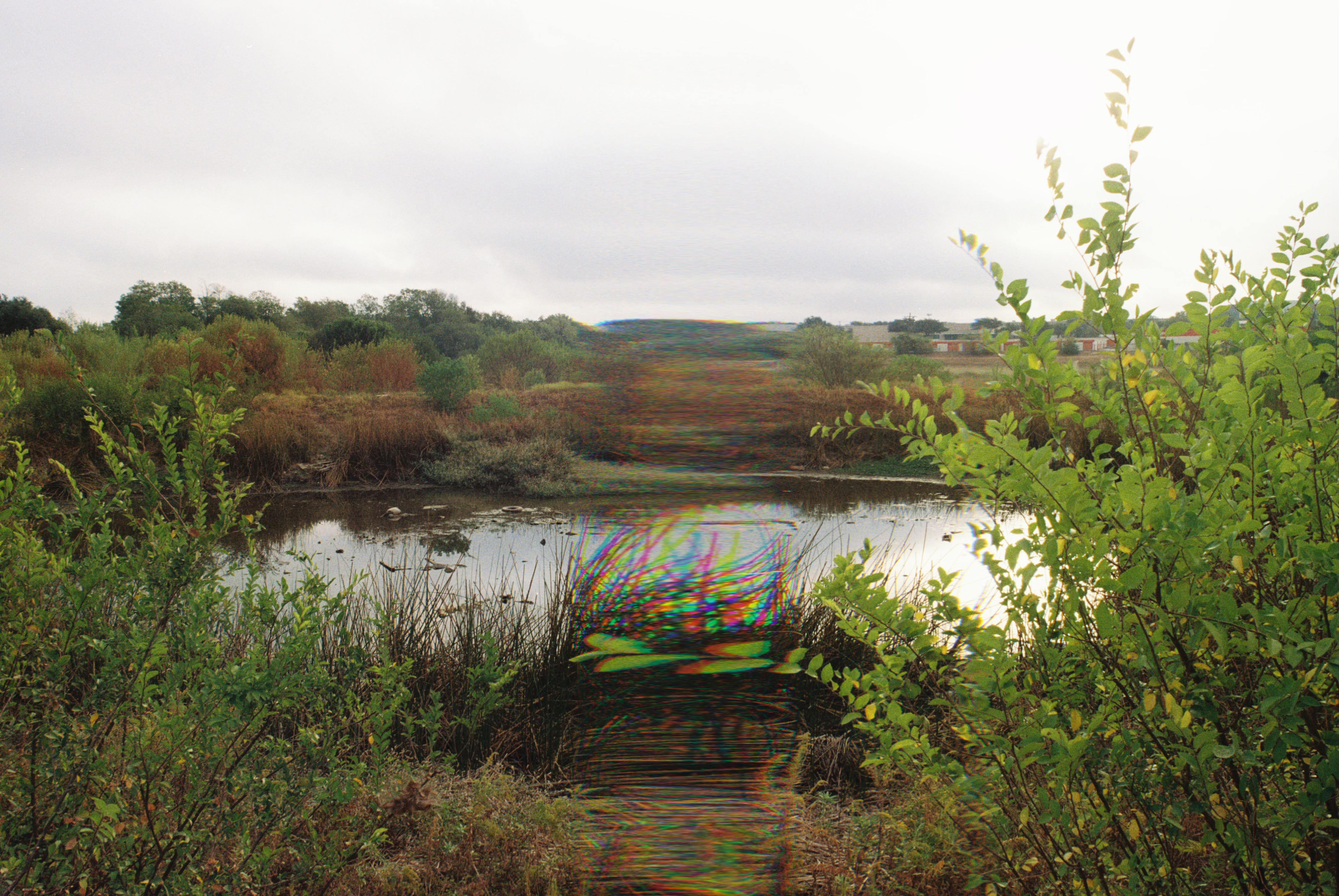
Friday morning as the front rolled in that would finally bring us some rain, I went for a walk beneath the platforms of two elevated freeways with my friend Paul, before we both headed to work. Paul is a birder, and this unlikely pocket of urban wild space he wanted to show me is also one I had long wanted to visit, after more than two decades of glancing curiously down at it while hurtling through the labyrinthine concrete cloverleaf where State Highway 183 intersects with the Mopac freeway.
When my son Hugo was his little sister’s age, 24 years ago, we went searching for the source of Shoal Creek, one of the main tributaries of the Colorado that cuts through the northern half of Austin. We lived close to the creek, and as transplanted Midwesterners were excited to find a place within walking distance of home where you could easily find fossils mixed in with the rocks of the limestone creekbed. Once you’re in a half-dry creek like that, you realize what a great trail it is, and want to follow it. We read about its history, how it used to always be full of water. The old-school paper street map we had in the car showed the full course of the creek, and at the origin point we saw icons marking the location of natural springs. We went looking for them, and found a new shopping center had been built where the map said the springs were. It was named The Arboretum, probably for the trees that the developers killed to make room for a Pottery Barn, and as we traced the coordinates we found ourselves looking down into a gabion well outside an office building. Ever since, every time I drove that way I’d see these ponds on the opposite side of the interchange, and wonder what connection they might have to that re-engineered ecology.
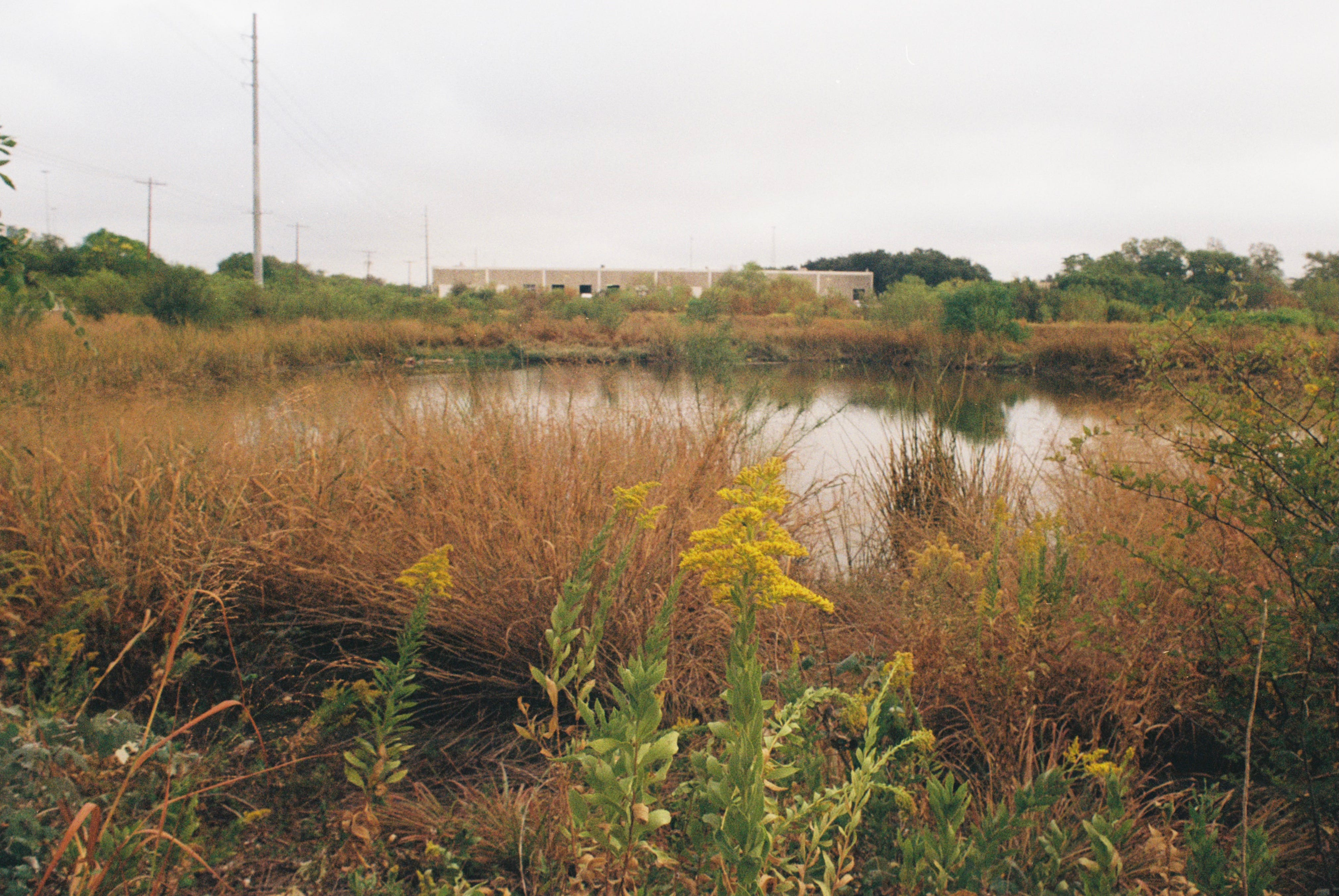
Paul and I met at 8 behind a Firestone shop along the frontage road. He was there when I arrived, binoculars in hand as he surveyed one of the ponds. The fall migration had mostly already passed through over the month preceding, though there were still a few stragglers. It looked like the state troopers had been through the week before, in the sweeps of homeless camps on city-owned land that the governor ordered without consulting city officials. As a consequence, it was quiet enough for Paul to make out every bird call, with the traffic noise just distant enough.
We saw one other human on the levee, and a lone Cabbage Patch Doll face down on the ballast along the railroad tracks, its pants around its ankles. We saw a lot of no trespassing signs as we got deeper into the zone, but knew they marked public property. The signs of life were a little sparse, until we crossed the tracks and made our way to the south pond and the dry wetland below the overpass. An egret in the water, a red-tailed hawk in a tree, prodigious crops of wild onion bulb underfoot, and the sound of a lone killdeer behind the Public Storage.
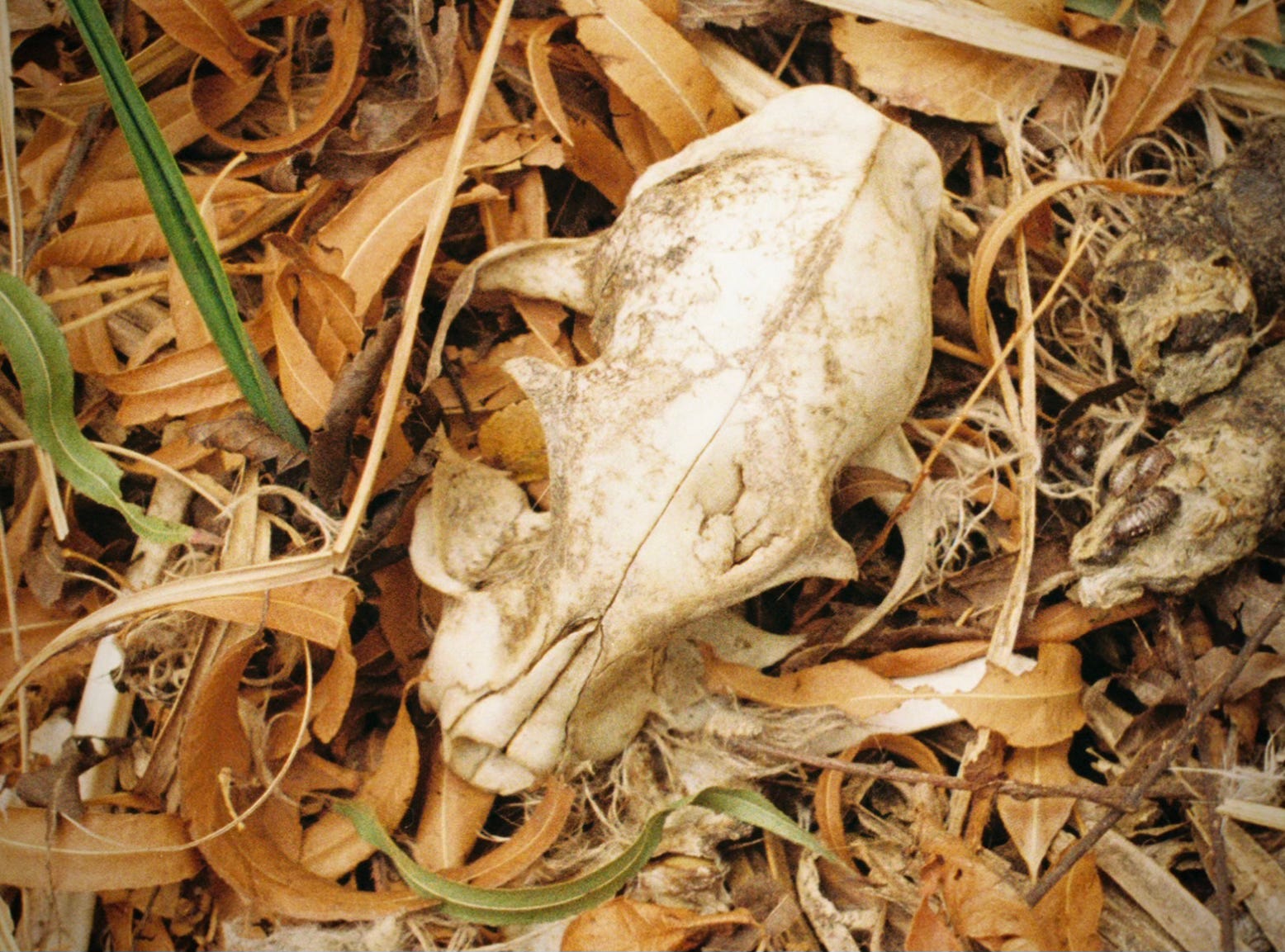
On our way back we checked out the patch of woods that parallels the tracks. Paul showed me a mature willow he has found a lot of cool birds in, and I found the skull of a medium-sized mammalian predator in a little clearing next to some coyote scat. In the moment I guessed it to be an opossum, but after some research now think it was likely a feral cat.
Places like that have a weird charisma, the way they hide the natural history of the region in the margins of our enshittified suburban landscape. Southern Pacific built a water stop for the steam trains at that spot, no doubt because there was ample water coming up out of the ground, and you can bet research would show that the highway they call Research Boulevard followed the path of some more ancient trail that preceded Anglo-American settlement. The idea that beautiful migratory birds seek cover in the sliver of junk woods that have been allowed to grow between a freight line and a freeway is both wondrous and sad, even as you can see what could be if we let that memory in the land more fully express.
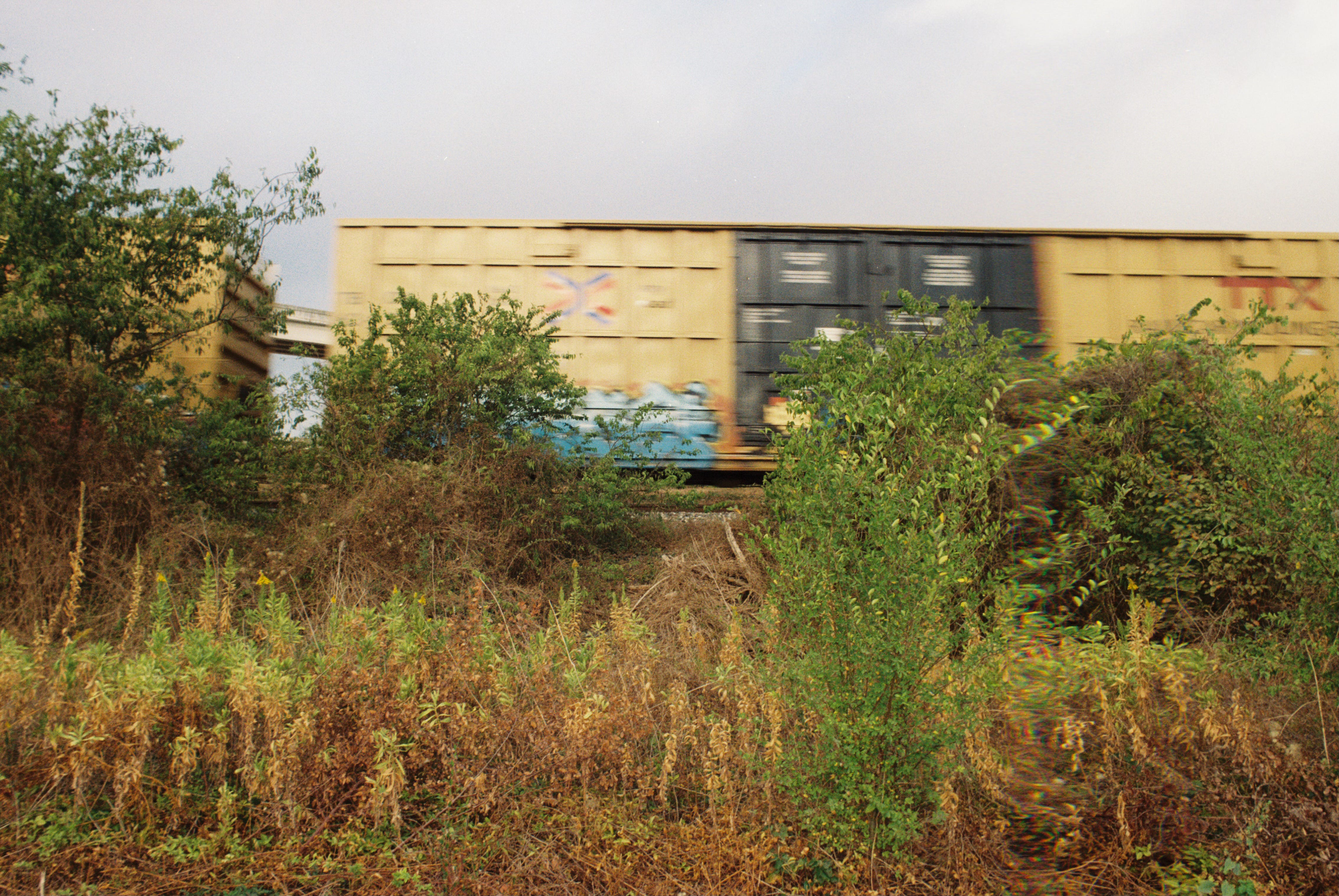
We talked as we walked about Paul’s career path as a newly minted member of the bar setting out on a path as a public interest environmental lawyer. He and I had worked together on some river advocacy projects during lockdown, and had a lot of fun and a tiny bit of success taking on Tesla. I was heartened to hear he was sticking with his plan, which is not one the system makes easy.
We didn’t see any springs. Just a lot of concrete channels, one of which had been tagged with a message from the underground: “TAYLOR SWIFT IS A CIA PSYOP.”
The rain came that night, with thunder and lightning intense enough to awaken me from a deep slumber. After two brutally dry, hot months, the ecological response to the sudden saturation was immediate. By midday, when the sun was up and the clouds cleared, my daughter and I took in the marvel of a dragonfly ballet here in our feral lot behind the door factory. She didn’t notice it at first, as we walked out to the car, but when she did she lit up at the energy of dozens of little monsters zig-zagging above the desiccated foliage from which must have just hatched a brood of smaller flying nymphs we could not see.
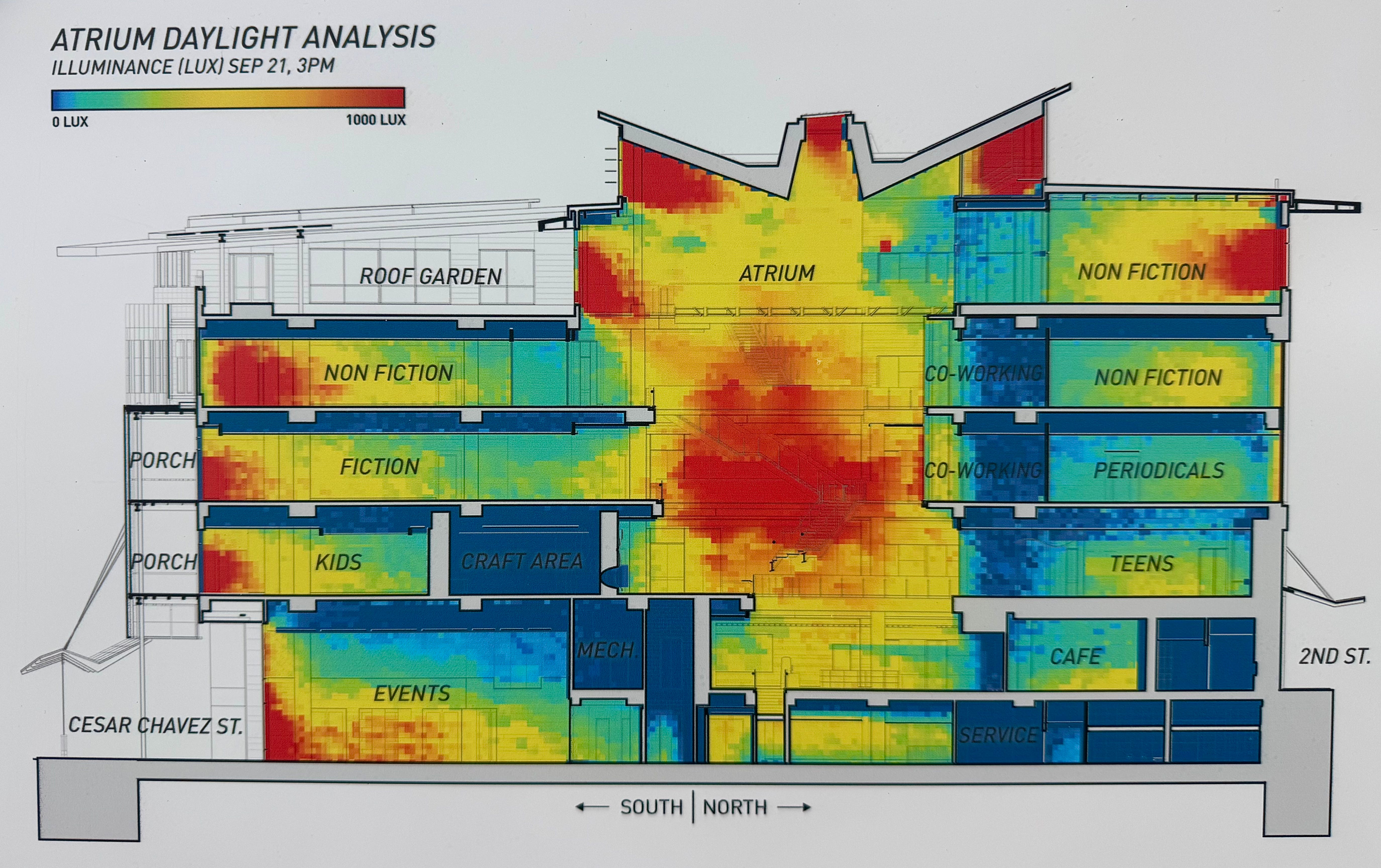
We were headed to the Central Branch of the Austin Public Library, while Mom worked on finalizing Addams Family costumes for Wednesday and Morticia (my Gomez only required finding the pinstripe suit at the back of the closet). We’ve been spending a lot of time at the library, as Octavia has just had some breakthroughs as a new reader, Agustina and I are both in research mode on new projects, and the utopian promise of the public library has felt like a particular sanctuary in this darkening historical moment. Our main branch is especially promising in that regard, managing to be a temple of books that is also a temple of light deeply connected to its natural context, and staffed by an incredible team of professionals, many of them graduates of UT’s world-class information studies (fka library sciences) program.
On the wall by the fiction, you can even find a handy infographic guide to the library’s levels of illumination:
We had just passed the interstate, where the grackles were lined up atop the new sound barriers they have erected to muffle the cacophony of its coming expansion, when Octavia announced from the backseat that she didn’t want to go to the library after all. Instead, she said, we should just go out for lunch at her favorite place for noodles (which is catercorner from the library) and then return home. I could sense the certainty in her declaration, and acceded. But I continued in that direction, until a minute later when we pulled up to the light around Brazos Street, and I saw the road ahead was entirely blocked by a Die Hard-level deployment of police and fire trucks with their emergency lights on.
We diverted, found an alternate route, and got to the restaurant. Noodles ordered, I looked on my phone for more info about the emergency. And got a sobering lesson in the power of my child’s intuition:

I looked again a few minutes later, as we drew monsters on our placemats, and learned the shooter had escaped and was at large. That’s when I put my phone down and started paying more attention to what was going on around me.
Thankfully, just one person was injured, and no one killed, in what was evidently a dispute between two people known to each other, which transpired in the men’s bathroom on the top floor. The suspect was apprehended near a Starbucks in South Austin around 90 minutes later, in an area a lot like the frontage road edgeland I had been exploring with Paul the morning before.
Before we left the lunch spot I emailed a librarian I have gotten to know over the past year, to make sure she and her colleagues were okay. She replied that they and all but one patron were, that the years of active shooter training somehow did not work to prepare them for the experience, and that they were staying home the next day.
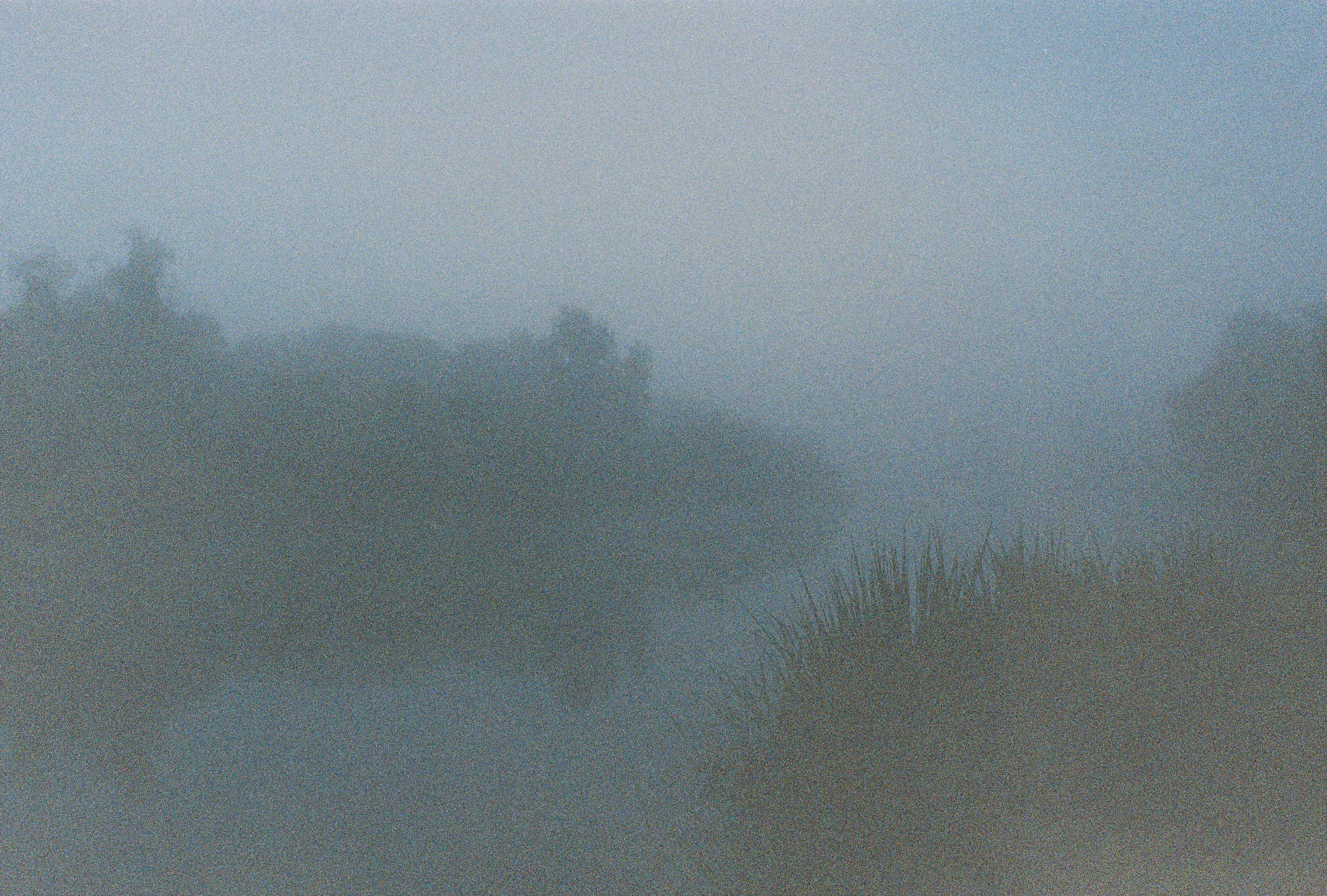
It rained again that night, and Sunday morning came the fog, so thick that when the puppy and I walked down to the river it was like stepping into the cover of some lost album of ambient music.
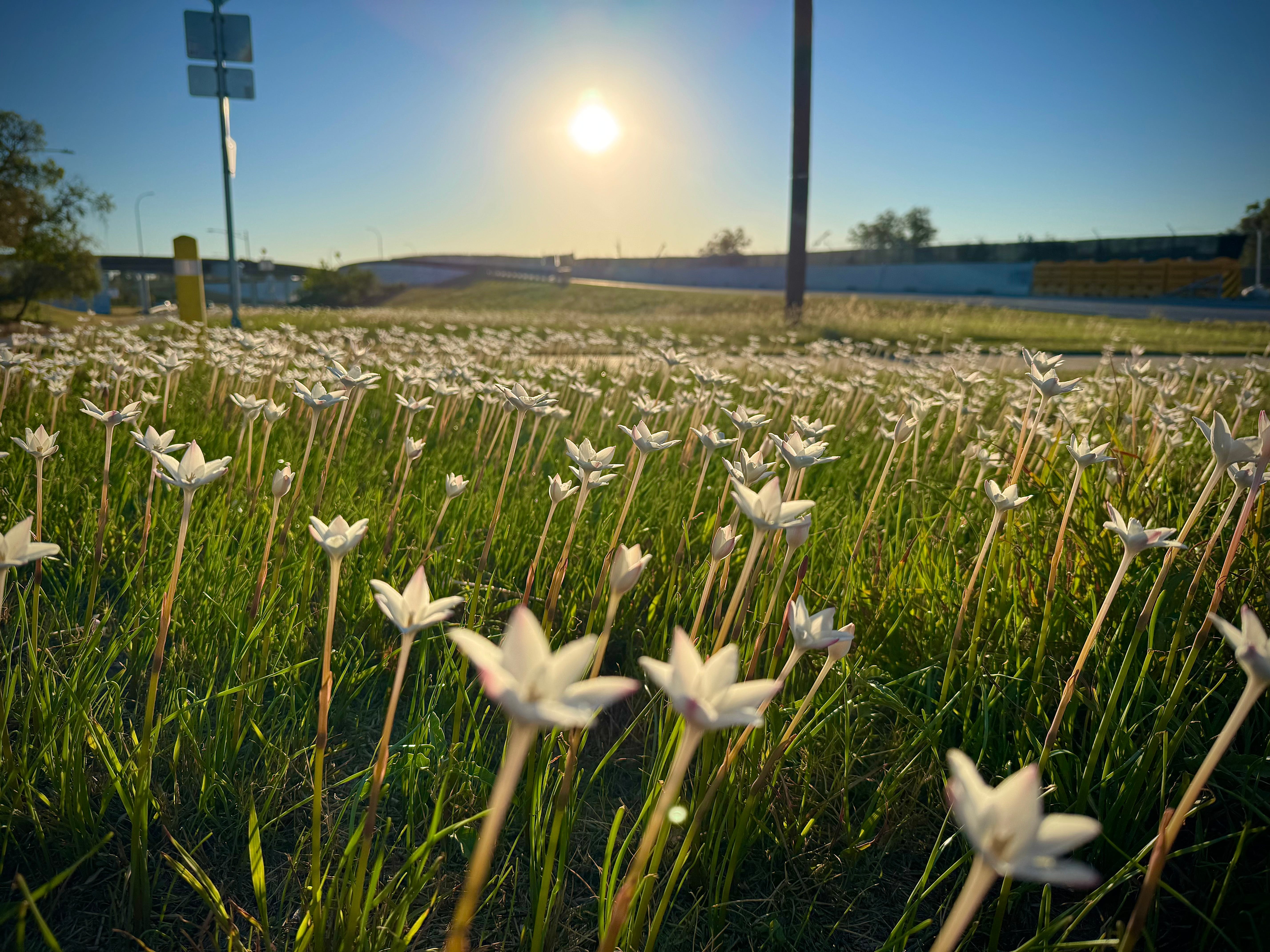
A few days later, right on cue, the rain lilies came up from the ground. Native wildflowers that somehow only respond to actual rain, not water from a hose, and seem to thrive in the most blighted, recently scraped patches of bulldozed dirt. I found them Thursday at the base of the onramp, greeting the sun as it rose over the tollway. Maybe it was the imminence of Halloween and Dia de los Muertos that made me see them for the first time not so much as wildflowers but as lilies, funerary flowers, offerings for the dead.
At lunch that afternoon, I read in the paper how scientists now believe that the exceptionally high water temperatures of the summer of 2023 have rendered the elkhorn and staghorn coral of Florida functionally extinct, raising concern about the viability of the rest of that marine ecosystem. Then I turned the page and read that the Japanese government is sending the Army into Akita prefecture to help exterminate the bears, which was like reading that they were hunting down Totoro.
When I suited up Friday after work and took Octavia trick or treating, we found another patch of rain lilies, this one in the median along the sidewalk in front of an unintentionally scary looking old house. She had been method acting the goth morbidity of Wednesday Addams with such a convincing ease over the course of the week that I shouldn’t have been surprised when she plucked one, and then gave it to a stranger as we arrived at her aunt and uncle’s house.
In the morning I found a rare specimen freshly hatched on our kitchen counter: A plume moth, a flying creature so strange in its anatomy, with wings like pipe cleaners and limbs of needle-like spikes, that you cannot quite believe it is truly alive until it flies away as you try to catch it and free it outside. Only now, looking at the picture, do I notice that it came in Halloween colors.
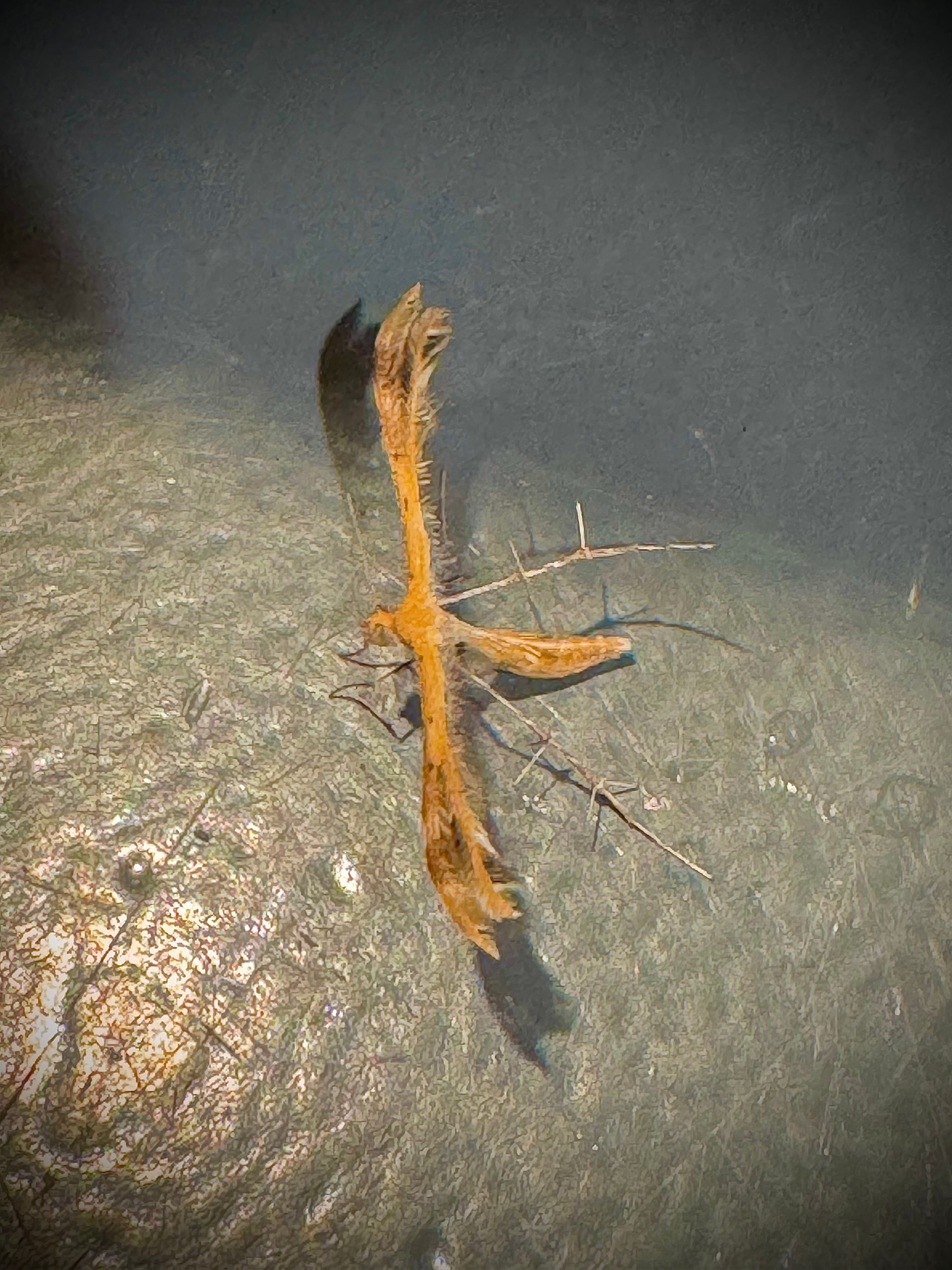
At the end of a grim week, it was good to get a reminder that there are still strange wild things being born all around us—even if we are not so good at seeing them, let alone being good stewards of the environment we share with them. I’m still coming to terms with the way our daughter, who loves the light, seems to be thinking she also needs to develop fresh tools to navigate the dark.
Today Octavia wants to teach me how to make an ofrenda. I wonder what other lessons she and her peers will have for us, when they take the reins of the future we have made for them.
In memory of Emily Lott, 1947-2025
The Roundup
This Wednesday evening, November 5, I’ll be teaching a class on “Writing the Natural World: A 21st Century Reboot” for the Writer’s League of Texas. It’s a single session, and you can participate from anywhere on the planet as long as you can do it from 6:30-9:30 pm CST. Details and registration here.
Thursday, November 6, I’ll be giving a talk about A Natural History of Empty Lots at the Joynes Reading Room on the UT-Austin campus as part of the Plan II Honors Program’s 2025-26 lecture series, co-sponsored by the Rapoport Center for Human Rights & Justice. Open to the public—details here.
And Saturday night, November 8, I’ll be participating in one of the Lit Crawl events for Texas Book Festival, 7-8 pm at the Speakeasy at 4th & Congress downtown.
At WSJ, the rise of the water sommelier, and $95 bottles of melted glacier.
I loved this Michelle Nijhuis post on “sintering”—the process whereby snowflakes build connections with each other after they fall.
On the political front, I was struck by this incisive Mark Lilla piece in the Nov. 6 issue of the NYRB tracing the seeds of our current situation back to the beginning of the 90s and beyond.
Enjoy your extra hour, keep an eye out for migrating monarchs, check out Wednesday’s full moon, and stay safe.
Thank you, Mr. Brown, for continuing to remind us to be aware of nature in the interstitial spaces of our profoundly human-altered environment. It is a mindfulness for which I find myself needing constant encouragement. And bless you for being a good dad and listening to your daughter...who knows.
A little off topic (but not really): I hope your young friend Paul, as he begins a career in public interest environmental law, is aware of Thomas Linzey and Center for Democratic and Environmental Rights. He (Paul) should know upfront how environmental regulation is a game rigged against him.
And btw, your phrase "cover of lost album of ambient music" was a gem of concise description!
Look forward to your next missive.
I'm jealous that you took another birder on this expedition, Chris, but I'll get over it. Great work as always. Amazing shot of the wild onions. Strangely, it reminds me a lot of a recent painting by my friend the great artist April Garner, even though her picture has a great blue heron covered with Jimson weed blossoms. The effect is somehow similar.